Tuesday, June 23, 2015

Musicologist Analyzes How Sondheim Found his Sound

[Photo: Mandy and Madonna sing "What Can You Lose?"]

Diehard Sondheim Fan Club member since 1974, I still have to admit that I cannot hum some of Stephen Sondheim's songs.  Musicologist Steve Swayne explains why.  He also explains why that's a good thing.

Swayne borrows a phrase from a Sondheim lyric to explain that "Sondheim's melodies often start out like songs," but then show a "remarkable degree of motivic compression" (Swayne 103).  Swayne demonstrates what he means in fifteen pages analyzing one short ballad, "What Can You Lose?" from the Disney film Dick Tracy (1990).  He traces every phrase of the tune to the first "motif," four notes sung by the character "88 Keys" (Mandy Patinkin).  This one motif appears "no fewer than twenty-eight times" in just 30-odd measures of singing. Sometimes the four note phrase repeats a note, or jumps up instead down. so that "the song becomes difficult to remember precisely; one must make a concentrated effort to commit its melodic nuances to memory."  Having tried and failed many times to sing this song in the car, I can second that.

For comparison, Swayne tells how "hummable" songwriters introduce two or three different motifs early.  Even in the motif-driven song "Bewitched, Bothered, and Bewildered," composer Richard Rodgers combines the motif of an upward scale with the three-note motif repeated on the syllables "wild again," "(be)guiled again," "simpering," etc. Rodgers goes on to invert the pattern at the bridge.  Sondheim can write that way too; Swayne gives "Anyone Can Whistle" as an example of a tune built from a variety of ideas.

But Sondheim most often works with just one motif.  Why?  From early in his musical education, Sondheim aimed for "the quality indigenous to the best art: maximum development of the minimum of material" (Sondheim, lauding songs of Jerome Kern, 53).

Besides, as Swayne demonstrates with "What Can You Lose?" Sondheim can vary a single motif to express characters' thoughts and feelings.  In a way, he's using the music to act the part.

Swayne starts his book with Sondheim's explanation, "I've discovered that... essentially I'm a playwright who writes with song, and that playwrights are actors" (1).  So, for "What Can You Lose?" the character 88 Keys is seated at a piano late at night beside the woman he secretly adores, and the piano accompaniment therefore sounds improvised, ruminative.  The first four notes pick up on the rhythm and inflection of a phrase in the dialogue just completed: "What can you lose?"  Swayne demonstrates numerous ways that the four-note motive varies to show rising hope as "88" imagines telling her his feelings, while, throughout, the piano accompaniment says something different:

But its rhythmic emphases off the beat... its doubling in the soprano and tenor voices, and its descent of a third all convey leadenness of heart and futility of hope.  The answer to his titular question is something 88 Keys already knows.  When he asks it, the [accompaniment] answers him: you will lose (116). 

Midway, the song seems to start over, as "88" begins to imagine another possibility, that she already knows the truth and chooses to ignore it; the motive bends with the character's feelings.  

Swayne tells us that Sondheim's songs are "kinetic" (120).  There's no repeated "hook" as in rock and pop songs, because those are "inherently undramatic," treading the same emotional territory over and over.  Sondheim doesn't often resort to driving rhythmic patterns to move a song forward independent of character, preferring that the forward motion come from developments internal to the character's song.

With this analysis at the core of his book, Swayne packs the rest with what Sondheim learned from his teachers and from classical composers (especially Ravel), from the Broadway masters of his teens (especially Harold Arlen), and from film.

Much of this I've heard before in books about Sondheim from Craig Zadan's Sondheim and Company (1974) onward, and articles in Sondheim Review.  Here are some fun bits that are new to me, or, at least, newly remembered:

  • Sondheim borrows a technique that he described in a student paper on Ravel, that of re-harmonizing the accompaniment under a motif that repeats, unvaried, as under the phrase "Finishing the hat..." (19)
  • The first notes sung in "Send in the Clowns" are an inversion of a motif in the "theme" from A Little Night Music, the one sung to the words, "Five o'clock...Six o'clock..." etc.
  • The "follies" dream numbers for the four main characters in Follies are derived from "book" songs they sang in character earlier in the show; and the accompaniment of "Sally's" song "Losing My Mind" is inverted to make the accompaniment for the song of her counterpart "Phyllis" in "Lucy and Jessie."
  • The five-note "bean theme" in Into the Woods strikes again, in the song "No One Is Alone": inverted, they are the notes of the song's bridge section, beginning, "People make mistakes."
  • Hard to believe:  Sondheim remembers that Bernstein faulted him for sticking "wrong notes" such as the augmented fourth (or "tritone") in his music -- presumably to show off his sophistication.  Sondheim pointed out that "I Feel Pretty" is the one song in West Side Story that does not contain the tritone.  Now, I knew that; but I'm shocked to read that Bernstein was shocked (91).
  • Sondheim taught Bernstein how to add a "thumb line" in the 2/4 measures of the introductory verse to "Something's Coming" in West Side Story.  I knew that, but I didn't notice that Bernstein went on to base the rest of the song on that same "thumb line." (92) (Now, this is embarrassing, because I've known that song well since 1964.)
  • Sondheim was excited by the possibility that three characters' three songs at the start of A Little Night Music could all go together, but he didn't want the audience to see it coming.  To make it work, he says, he filled the chords of the third song "Soon"  with sixths and fourths, so the accompaniment would be "like spaghetti sauce -- it'll cover almost anything" (251).
  • About how he based the entire score of Anyone Can Whistle on two intervals (played by the first four notes of the Overture), Sondheim admits that the audience probably wouldn't hear "the seeds" of the songs, except maybe subliminally. But the technique "helped me to write the score"(245)
  • Swayne uses the song "Putting it Together" to demonstrate how Sondheim has found musical ways to achieve cinematic effects -- cross-fades and tracking shots, as when we follow the character "George"  through the sung dialogue of ten other characters.
Because Sondheim, "playwright in song," thinks visually as well as dramatically and musically, Swayne concludes that we must use our eyes as well as our ears to "grasp how Sondheim found his sound".

[See my Sondheim page for many other reflections on matters relating to Sondheim, his shows, and musical theatre more generally.]

Source
Swayne, Steve.  How Sondheim Found His Sound.  Ann Arbor, MI: University of Michigan Press, 2005.

Saturday, June 20, 2015

Mozart, Eminem 'n' Me

When you take the words out of rap, you're left with a form that Mozart would recognize instantly.

I discovered this when a student's family won my service as composer in the school's recent auction.  The boy wanted a rap song, but he wanted to play it on piano.  He assigned me some research into videos by Eminem and Lil Wayne.

I noted this structure to the pieces that I heard:
A "hook," a tune played on instruments the first time, sung later.
Two-to-four stanzas of rapping declaimed over a repeated bass line
Repeat of the "hook"
More rapping, different pattern over the same repeated bass line
Repeat of the hook

I noticed that the rapper squeezes more and more words into four beats as the song progresses. 

[Image: page one of rap for piano solo]
That's just a Rondo, such as Mozart's Rondo a la Turk:  ABACADA, where "A" is the familiar "hook," and B, C, and D are increasingly showy variations over the same root chords.

So, am I the last musician in the world to figure this out, or one of the first?

Friday, June 19, 2015

The Manden Charter of 1222:
African Exceptionalism?

A student of mine in 7th grade once proposed to do a researched essay on the question, "When will Africans evolve?"  I took her into the hall to make her understand how limited our view of Africa is, and how the assumptions behind her question would be a wedge between her and African American friends.  She understood the implications of the word "evolved," then, but still was interested only in researching the poverty and strife that bolstered her preconceptions of Africa as a pitiable land, from her vantage point of Exceptional America.  

Today, I heard a report by Ibrahima Diane on the BBC program The Fifth Floor that I thought would open my students' eyes (link to listen).   Now that I've done a cursory search of the internet, I'm a little less excited.  Still, what I heard is interesting in itself.

From the same time as Magna Carta, we now have the Manden Charter, transcribed from oral history revealed to a French scholar by Malian griots in the 1990s.   Because its form was fluid as memory until then, susceptible to influences from modern politics and culture, we have reason to wonder if its contents have not been shaped in part by wishful thinking:  Wouldn't it be great to prove that the seminal document of Western democracy had an African twin, arrived at independently?  

So, with the caveat that something may have been gained in translation, here's a taste of what I've learned about this Manden Charter:

The document, also known as the Kurukan Fuga, proclaims the rights of individuals, even those held in slavery.  The body is only a man's dressing, it says:


But his ‘soul’, his spirit lives on three things:

He must see what he wishes to see

He must say what he wishes to say
And do what he wishes to do  
(translation by Michael Neocosmos, "The Manden Charter," The Franz Fanon Blog)

So every individual man's rights are to be respected.  We are also told not to offend "women, our mothers."

The "Joking relationship" among people of a community is also to be sacrosanct.  That is, satire is not actionable, and all are encouraged to laugh at the king.  (from a list of articles at the Wikipedia article for Kouroukan Fouga).

Like Magna Carta, some of the Manden Charter's articles refer to immediate concerns at the time of the agreement, such as the decree that "Fakombe is nominated chief of hunters," and fixing the price for a dowry as three cows.  Also like Magna Carta, this constitutional document was instantly ignored. Slavery among the Malian people continued, only escalating when Europeans got into the slave trade three centuries later.

I understand from the interview on BBC that this would have been influenced by Islamic teaching, though I see no specific references to the Prophet or to God of Abraham and Jesus.  As I'm currently reading Theology for a Troubled Believer by Diogenes Allen, I've been thinking about Allen's claim that the absolute value of the individual is an idea that cannot be derived from anything other than "revealed religion."  Philosophers and political theorists since the Enlightenment have tried and failed.   Here is the absolute value of the individual asserted in a 13th century agreement, and many more Enlightenment ideals besides. 

At the least, the Manden Charter should give pause to anyone who makes much of "American Exceptionalism."

Thursday, June 18, 2015

The Rodgers and Hammerstein Touch


At the bank's drive-through window, tears blurred my vision as the radio played the finale of Carousel by Richard Rodgers and Oscar Hammerstein III, performed by Chicago Lyric Opera.   It was the second time in a week that Rodgers and Hammerstein had touched me, after an excerpt of The King and I performed on the Tony awards.

[Photo: Kelli O'Hara and Ken Watanabe perform "Shall We Dance?" from www.theatermania.com]

Why I was touched, I'm still trying to figure out.  I've no prior emotional attachment to Carousel, while the song "Shall We Dance?" from The King and I  is over-familiar.  Besides, I've always thought that Hammerstein spoke through his character "Nellie" in South Pacific when he had her sing, "They call me a cockeyed optimist," and, "I'm as corny as Kansas in August."

But one man's "corniness" is another man's generosity of heart.  Hammerstein ends Carousel with a country doctor's advice to graduates of a small-town high school, including this:  "Don't worry if other people don't like you; you try to like them."  Hammerstein digs to appreciate what's good in his characters, Carousel's volatile leading man Billy Bigelow a prime example.  Earlier, the ingenue sang, with Billy in mind, "What's the use of wond'ring / If he's good or if he's bad?.. /  ...You love him... /  There's nothing more to say."  Composer Richard Rodgers inserts a long pause before that last line, musically surprising, dramatically expressive of the character's inexpressible feeling. 

The spirit of Billy Bigelow, killed before his daughter was born, urges his grown daughter to listen to the speaker, who goes on to promise the graduates that, whatever crises they face, "You'll never walk alone."  Cue orchestra, cue chorus reprising that promise, cue copious tears.  We're in Hammerstein's world, and we want to believe that everyone who has loved us, though they're gone, is still at work in us; we want to believe that it's possible to hold on to the good when we face the bad. We want to learn from Billy Bigelow not to die without saying the things we want to say to our loved ones.  It's the kind of sentiment mocked in the ad, "I love ya', man."  But that doesn't make it less real. 

"Shall We Dance?" on the other hand, is a sophisticated piece of theatre, without leaning on irony or detachment. The song comes late in the show, when the governess Anna, alone with the King of Siam, answers his questions about courtship in England.

Anna and the King have come to represent Western Liberalism and Eastern Tradition, and have gained respect for each other.  Their battles of will have often been funny, but we know that Anna is secretly involved in a life-and-death matter involving one of the King's many slave-wives.  We also know from an earlier song that Anna's description of young lovers comes from memory of her late, beloved husband.  All of this subtext goes into a song that appears to be so simple. Anna sets the scene:
We've just been introduced.
I do not know you well.
But when the music started
Something drew me to your side.

So many men and girls
Are in each others' arms.
It seems to me we might be
Similarly occupied.

That formality of the last two lines, punctuated by inner rhyme and end rhyme, makes us smile.  Then, Anna sings the refrain, miming the action.  The words fly off into images of romantic fantasy, come back to earth for a little business formality -- "on the clear understanding that this kind of thing can happen" -- before three repetitions turn "Shall we dance?" from polite interrogative to imperative.   

Shall we dance?
On a bright cloud of music,
Shall we fly?
Shall we dance?
Shall we then say "good night"
And mean "good-bye?"
Or perchance,
When the last little star has left the sky,
Will we still be together
With our arms around each other
And will you be my new romance?
On the clear understanding
That this kind of thing can happen,
Shall we dance?
Shall we dance?
Shall we dance?   (lyric by Oscar Hammerstein III)
Holding hands up but apart, Anna instructs the King, who repeats the refrain with her, getting a laugh when he tries to count "1,2,3, and...."

The moment that gets to me (even now, while I type this) is what we saw on screen at the Tonys. The King
stops the lesson to demand that Anna dance with him the way he's seen it done, hands clasped, bodies close. Rodgers's music swells to launch the two around the vast stage with joyful abandon.  It's a moment that can't last:  Anna's help to the slave is an affront to the King's authority that will shame him and destroy him.

So much is packed into that moment when they stop singing, join hands, and cover the entire stage with their dance: it's dramatic poetry. 

On the Tonys broadcast, the song was a beautiful moment that stood out among the co-hosts' ironically retro banter, all bad puns and innuendo; and ads that played on cute sentiment, sexuality, and desire for status to sell us products.   

Really, a few minutes in Rodgers' and Hammerstein's "corny" world may make us weep for ours.  

[See my Sondheim page for many other reflections on matters relating to Oscar Hammerstein's protege Stephen Sondheim, and musical theatre more generally.]

Sunday, June 14, 2015

Agatha Christie's Miss Marple At Bertram's Hotel

In Agatha Christie's 1960s novel At Bertram's Hotel, one of her last to feature elderly Jane Marple, crime seems to be of less interest to the author than mores of a time marked by the ascent of "Beatles, or whatever they called themselves" (Kindle Edition 410).

As my friend Susan Rouse points out, nostalgia is built into the whole Jane Marple series.  Most of the stories take place in Miss Marple's little town post-World War II, a time for loss of empire, domestic displacement, and learning of a new normal.  "Much of her life had...to be spent recalling past pleasures," Christie writes (220).

Here, nostalgia is the point.  Miss Marple on holiday is merely one of a half-dozen denizens of an old London hotel who get our attention.  Through description and dialogue, Christie makes much of the hotel's preservation of forms and manners of the pre-war era.  Miss Marple hardly speaks of anything else, and mostly hangs in the background of others' stories.  We see a glamorous and scandalous jet-setter, American tourists, some old military men and clergymen.  A race-car driver in black leather appears.  But all are measured against the good old-fashioned qualities of the quaint hotel and its staff.  The common sentiment that Bertram's is all too good to be true turns out to be a point of the plot. 

We don't get a body until more than two-thirds of the way through the novel, though Christie throws in a single chapter early on to let us know that criminals use the hotel as a front.  Bertram's Hotel truly is "too good to be true."

Instead of investigating crime, we're following the actions of teenaged girls, one mischievous, the other cautious; and a clergyman pretty far along on the road to dementia. Their foibles are not treated as serious.  Adults observing the girls comment that one expects girls that age to lie about having improper boyfriends, and Canon Pennyfather's confusions are presented as endearing.

But Christie does suggest that the loose morals of the day are a sign of underlying evil.  The scandalous jet setter Lady Sedgwick comments, appropos her own marriage, "Plenty of adultery nowadays.  Children have to learn about it, have to grow up with it" (2450).   Speculating on the whereabouts of Canon Pennyfather, a policeman remarks, "Doesn't sound as if [the priest had] gone off with a choirboy" (1420), a line thrown away as if pederasty has become just one of those things to expect.  Permissive guardians and teachers are all "too nice" to the mischievous girl, observes a senior detective, but not Jane Marple.  He says she has "had a long life of experience in noticing evil, fancying evil, suspecting evil and going forth to do battle with evil" (2472). Marple reflects sadly that the French adage works as well in reverse, "Plus c'est la meme chose, plus ca change," as she has observed that the moral underpinnings have changed even where the forms have been maintained (2845).

Christie gives Miss Marple credible reasons to be in just the right places at the right times to witness clues.  Miss Marple just happens to be knitting in a high-backed chair of the hotel's writing room to overhear a certain conversation; happens to be in cafes not once, but twice, where she sees the race driver's assignations with women; happens to awaken around 3 a.m. to investigate a noise in the hall that turns out to be criminal activity.   While each incident is credible in itself, this reader just had to suspend disbelief in the interest of enjoying the whole.

Funny, Miss Marple in 1965 was looking back fondly on a more innocent time forty years or so earlier;  in 2015, it's been forty-five years since I read At Bertram's Hotel at the Sandy Springs Library, and, even then, in the post-Beatles Seventies, I was already nostalgic for the London of Diana Riggs's Avengers series and Petula Clark.  I know how Jane Marple feels.  I also agree with Dame Agatha, that a murder mystery is a great framework for social commentary.

[See my Detective Fiction page for capsule book reviews and links to reflective essays.]

Sunday, June 07, 2015

Canine Comedy Sylvia: How We Project onto our Pets

[Photo: Mia's eye says,"Can't I have breakfast in bed?" or am I just projecting?]


A.R.Gurney's comedy Sylvia starts from a bold conceit: a grown woman portrays "Sylvia" the dog (Amanda Crucher) as a biped in jeans who speaks aloud the kinds of thoughts that we dog owners attribute to our pups. Instead of barking, she says, "Hey! Hey!" Instead of wearing the leash, she holds it. She tells "Greg," her middle-aged rescuer (James Baskin), "I love you!  You are my God!"  When Greg's wife "Kate" finds her husband enthralled by the dog, we don't blame Kate for being jealous.

The story seems to come down to one question: will Greg choose Sylvia over Kate?  At Stage Door Players' production north of Atlanta, the cast rode a steady stream of laughs before they reached Gurney's surprising resolution. 

Director Shelley McCook writes in the program that she sees a larger, more universal crisis in the play.  She herself portrayed "Sylvia" in the first production I saw years ago, and naturally understood the play to be dog-centric.  But, as she points out, Greg and Kate, their children away at college, now "begin to explore previously overlooked dreams, ambitions, and longings," a moment that challenges their marriage of twenty years.  "The introduction of a 'younger woman' is only a catalyst for the conflict that emerges from this new and uncertain phase of their lives."

Perhaps because McCook herself, script in hand, subbed as "Kate" on the night that I saw the show, "Kate's" agonies stood out more than in other productions I've seen.   As the couple consult friends and a therapist  (all played convincingly by actor Doyle Reynolds), one important thought emerges, that "Greg" is projecting on "Sylvia."  A character at the dog park warns Greg away from using a human name for a dog:  "You'll forget she's just a dog."  The therapist suggests that a middle-aged man, no longer providing for children, is seeing in his dog's eyes all the adoration that he needs to see, to feel important.

Since I saw the play, I've looked more deeply into my dogs' eyes.  Am I wrong to see adoration in the eyes of my adolescent Mia?  When I see through a screen to my old dog Luis sitting at the top of steps that he used to climb at a gallop, am I wrong to read wistfulness into that face?

[Photo: Luis, through window screen, unaware of me]

Friday, June 05, 2015

Jack Kirby: "King of Comics" Exploded the Panels

"Kirby is coming!"

This promotional tag printed in some DC comics in the early 1970s made me uneasy.  At age eleven, I liked DC the way it was, uncrowded panels stepping us through the story from upper left to lower right, and its stories ending with bad guy in jail, hero in civilian clothes, life restored to normal until the next month's issue.  


Jack Kirby cracked open my comic book world, as he had been doing since comics were new.  Cartoonist Jules Feiffer wrote of Kirby's collaborations with Joe Simon in the 1940s, "Every panel was a population explosion -- casts of thousands: all fighting leaping, falling, crawling...Speed was the thing, rocking, uproarious speed" (Feiffer in Evanier, 49).

In the 1960s, with Stan Lee, Steve Ditko, and others at DC's rival company, Kirby developed what came to be known as the "Marvel Universe," where characters' actions in one comic book had repercussions in another; a super-being such as the Hulk or Silver Surfer could be a hero in one context and a threat in another; a guy's personal problems didn't end when he put on his tights.  Happy endings? Forget about it!

The Marvel model seemed chaotic and pretty depressing to me, so I remained wary when Kirby titles started to show up in the revolving comics rack at the drug storeBut Kirby had created a meta-story for our world that had already involved my favorite DC characters: we learned that the corporation buying the Daily Planet was a front, making of Clark "Superman" Kent an unwitting employee of the evil lord in Kirby's inter-planetary cold war between New Genesis and Apokolips.

I surrendered to Kirby's vision, as did fantasy writer Neil Gaiman:
Kirby's Fourth World turned my head inside out.  It was a space opera of gargantuan scale played out mostly on Earth with comics that featured (among other things) a gang of cosmic hippies, a super escape artist, and an entire head-turning pantheon of powerful New Gods.  (Gaiman, introduction to Evanier, 11)


I learned to appreciate Kirby's damn-the-perspective, full-speed-ahead approach to drawing. His hobby of making photo collages may be a key to his style.  Abstracted from their original context in photographs and pasted in a jumble, forms lose their function, and perspective vanishes; but odd juxtapositions draw the eye and challenge the imagination to make its own sense.  See what I mean in the memorable spread from New Gods #1 pasted in the upper-left hand corner of my little collage of Kirby drawings created for this blog.  Long curves, jagged lines, some kind of colossal statue, some disconnected machinery, some background silhouettes, together make no architectural sense, but all suggest a magnificent unearthly city.  Biographer Mark Evanier comments about Kirby's collage-making,

The skill was not unrelated to the manner in which he created stories.  Most of Jack's creations in comics were, at their core, a matter of taking unconnected concepts -- notions he'd gleaned from reading or movies or just sitting and musing about humanity -- and juxtaposing and/or melding them together in unlikely fusion. (171)

The black-and-white drawing in the background of my collage is part of "Street Code," Kirby's memoir of childhood, left unfinished in 1983 when his eyes made drawing nearly impossible.  Mark Evanier's biography of Kirby, King of Comics, prints the whole thing in its rough penciled state, including distortions due to Kirby's eye trouble.  But the two-page spread (see it online) is itself a collage of impressions recalled from the Lower East Side in the early 1920s, remarkable as anything else he ever drew. Kirby jumbles together glimpses of dozens of individuals all engaged in their own stories.

Kirby's own "spin on the American Dream," according to biographer Mark Evanier, was, "You make your boss rich and he'll take care of you."   Evanier, who met Kirby around the time that the artist quit Marvel to move to DC, observes, "All Jack's life he believed in that, no matter how many times the bosses got rich and he didn't" (37).  Exhibit A is "The Incredible Hulk Poster" that came to symbolize for Kirby what he saw as Marvel's lack of consideration for Kirby's work.  "He'd created something that was potentially profitable... but he hadn't received a cent and someone else's name was signed to work that was essentially his" (159).

Evanier's chapters cover Kirby's hard-knock childhood, apprenticeship copying others' art in basement "factories," creating "Captain America" with Joe Simon, quitting when Kirby and Simon saw no reward for their work, war in France, fruitless attempts to find an audience in the 1950s, reinventing the super-hero genre in the 60s, and the DC days.  Kirby was a prolific worker, but restless, always trying to climb the next rung of a ladder. No matter how successful his comics were, Kirby was "chained to the [drawing] board," haunted by the recurring nightmare that he might find himself again on the streets, unable to support his wife Roz and their children. Roz sometimes feared that "Jack would literally work himself to death" (138).  But his eyes and hand gave out before his heart.  Five years after his death in 1994, DC responded to reader interest with a reprinting of Kirby's "fourth world" saga that sold well.

Kirby's story might be sad, but Evanier leavens the biography with tributes to Kirby from movie makers, writers, and artists attesting to his lasting influence.  Evanier inserts short essays about the craft,  such as the one about collages (171), and others about the effect on Kirby's work of the self-censoring "comics code"(88),  and about Kirby's collaborator Mike Royer on the art of inking pencil drawings (179).  As one would hope, there's page after page of Kirby's art, bursting with energy and humor.

Evanier, Mark.  Kirby: King of Comics.  New York: Harry N. Abrams, Inc. 2008.     

Novelist Michael Chabon lists Jack Kirby as his inspiration "above all" for his wonderful novel, set among pioneering comic book creators, The Amazing Adventures of Kavalier and Klay.  Read the second of my two reflections on that novel here.

Wednesday, June 03, 2015

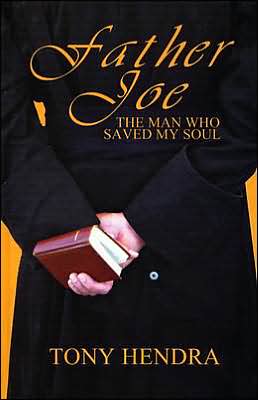
Comic Reveres Cleric: Father Joe by Tony Hendra

[Reflection on Father Joe: The Man Who Saved My Life by Tony Hendra.  I posted this on my web site in 2005.]

Tony Hendra's memories are all real ones, but his "Father Joe" still seems too good to be true. You know the book must lead to the last time the author meets this quaint and supernaturally wise old monk, and you're set to choke back tears over it ( the reviews on the back prepare you ), but then the epilogue gives the story another turn of the screw.

Hendra is someone I wouldn't like, someone who's spent his life in political causes and cultural niches I've detested. As I read, I could recall a half-dozen times I encountered his work. Shocking "Son O' God" comics and other titillating gross-out humor in National Lampoon magazine (70s), hilarious improvised acting in a take-off of rock-umentaries This is Spinal Tap (early 80s), and puppets caricaturing Reagan and Thatcher in Spitting Image (mid-80s).

But he's honest about himself, and his "progressive" politics don't keep him from cherishing old-fashioned religious practices and from voicing a caution to his own generation that the truly important things in life and society are eternal -- "progress" an illusion. Sounds very William F. Buckley - G . K. Chesterton conservative to me.

The book splits in two halves. The boy Hendra suffers a trip to meet a spiritual advisor named Father Joseph Warrilaw after being caught in an affair with a married woman, when he was only 14 years old. Hearing Hendra tell the story of the affair, Father Joe's reaction isn't the disapproval that the boy expects. Instead, he shakes his head: "How that poor woman must be suffering." That makes the boy realize how selfish he has been, never once thinking what the woman must have been feeling all along. The boy falls in love with monastic life, and aims to become a monk, until other things get in the way.

The second half of the book begins after twenty-five years of "other things," including worldly successes, a marriage, and a couple of children. Hendra has lost his faith, and he's still trying to use humor to change the world, and failing. He half-heartedly attempts suicide.

We expect the story to follow -- that he will go back to Father Joe, see the error of his ways, and become truly faithful for the first time. Yes, that's what happens, though it's not a straight line. Along the way, for example, we see Hendra toying with the idea of making a cruel satire about Father Joe himself.

Still, the author's evolving understanding of Father Joe's deeper wisdom helps us to share in him. That's the greatest gift in this book.

Here's a sample of Father Joe:
    People are always changing themselves and their world, dear. Very few of the changes are new. We rather confuse change and newness, I think. What is truly new never changes. . . . The world worships a certain kind of newness. People are always talking about a new car, or a new drink or [play] or house, but these things are not truly new, are they? They begin to get old the minute you acquire them. New is not in things. New is within us. The truly new is something that is new forever: you. . . .You have never lived this moment before and you never will again. In this sense the new is also the eternal.

In another memorable dialogue, Father Joe takes apart writer/director Hendra's driving need to make fun of political leaders in his television comedy work. Hendra admits to Joe that he hasn't changed any leaders' policies or voters' satisfaction with them. The dialogue also preserves some of Father Joe's verbal tics:
    "Well, the truth is, Father Joe," [says Hendra], "what we really do it for is -- attention. We all jostle endlessly to be on talk shows, get items in columns, in papers, or books on the best-seller list. . .how did you used to put it. . . to extend ourselves out into . . . other people's awareness."

    He considered this, looking out at the Solent.

    "Needing attention is a p - p - powerful force in the world, isn't it? . . . Without God, people find it very hard to know who they are or why they exist. But if others pay attention to them, praise them, write about them, discuss them, they think they've found the answers to both questions... [Then they] only have a personality other people shape.... [They] really exist only in other people's minds."

    "I think you've just described celebrity."

    "I've just described pride, dear."

Father Joe passes away as we know he must, but not before blessing Tony one more time.

The Epilogue, which I almost skipped, reveals a truth about Father Joe that Hendra and the monk concealed throughout the rest of the book: that every one of hundreds of people thought that he (or she) was Father Joe's one best friend.

Monday, June 01, 2015

Forward Day by Day: Looking Back, February to April 2015

[Photo: February snow, Atlanta's 2-in. blizzard, 2014]
"We hear God when waves crash, leaves rustle, and birds chirp as they welcome the morning," I read in Forward Day by Day, (Feb. 15, 2015).   Sun isn't up, yet, but the view from the lectern where I type now is a rustling wall of green, this June 1st. Back in February, we did have a snow day (though the photo is from a year earlier), and the view was a welcome respite from the drab greyish browns, and from the worst stretch of the year for teachers and students alike.  I often needed to hear the messages provided in the quarterly pamphlet Forward Day by Day (www.forwardmovement.org)  meditations from scriptures.  Now I have a some time to revisit messages that were particularly helpful.
Readings from February 2015
Writer Ann Rose, a professor of English and an Episcopalian, responded to the line Seek my face (Psalm 27:11) with an anecdote from Maya Angelou's first memoir: Angelou's 8th grade graduation at a segregated African-American school was marred by the discouraging message of the white school official who delivered the address.  Then the boy valedictorian discarded his own speech and sang the "Black National Anthem" that had been struck from the program, "Lift Every Voice and Sing."  Rose remarks on the courage he had, to see God's face and follow his heart.

Mark 9:7  This is my Son, the Beloved; listen to him!   Ann Rose writes that we hear God, not only in waves crashing and birds' songs, but "we can hear God's holiness in a toddler's giggle, and we can hear God's pain in the whimpering of a beloved pet.  We can hear God's call to action through the nightly news."  Rose points out that Orthodox icons depict saints with enlarged eyes and ears for a reason: We must be alert and open to perceiving God throughout our busy days.

Deuteronomy 6:10-12. When the Lord your God has brought you into the land... with fine, large cities that you did not build, houses filled with all sorts of goods that you did not fill, hewn cisterns that you did not hew, vineyards and olive groves that you did not plant... take care that you do not forget the Lord.    Rose hardly had to add what's true of most of us Americans, that it's "easy to think I deserved everything I had."  I wonder how verses 10-12 would look on one of those gauzy photo montages of stars, stripes, and happy consumers? In Romney's campaign rhetoric about "makers and takers" a couple years ago, I heard a message that those who have little, deserve little.  Republican Paul Ryan has since repudiated that idea, or has at least qualified it.  Progress!

Psalm 37:7  Do not fret yourself... Be still before the Lord.  Professor Rose writes, "Recently I fretted over someone else's failure to prepare a presentation well.  I fret over a single negative course evaluation from a student [and] petty politics that surface in committee meetings."  She and I have this trait in common, for sure -- especially in winter term.  She reminds us both to keep God at the center, and the trivialities will lose their power over us.

Rose gives us this anecdote to illustrate Hebrews 2:17, He had to become like his brothers and sisters in every respect:  when Rose asked friends to pray for a 13-year-old girl who was to begin administering insulin shots to herself, one of the friends began a regimen of cutting her fingertip with the corner of a razor blade so that she could understand the courage that the girl would need.

Professor of English Literature, Rose tells how she "backed off from" Romantic poets in college, judging them to be neo-pantheists.  Been there, thought that!  Noticing nature in the imagery of O.T. and Jesus, and discovering Celtic saints' works, she has found new connection to those poets and to the psalm 19:3-4, Although [the days and nights] have no words or language, and their voices are not heard, their sound has gone out into all lands, and their message to the ends of the world.

March 2015
Serving at Trinity Episcopal Church on Wall Street, Mark Bozzuti-Jones contributed meditations for March 2015.  I admit that I paid less attention during Lent, following our church's own devotion booklet.  Still, I noticed these bits from Fr. Mark:

He writes of making a mantra of John 5:17, My father is still working, and I am also working.  "We are all works in progress." He asks, "What is your work with and in God?"

John 7:6 My time has not yet come, but your time is always here.  The priest remembers a home where 300 clocks hung from the walls, because "for us, the time is always now."  In the passage, it's clear that Jesus' time to die had not yet come, but what does the next phrase mean for us?  The commentator suggests that "we are called to practice death," by which he means, "The clock is ticking, and we are being called now to go love and serve the Lord."

April  2015
"The world" is a theme that resonated through me most as I read meditations by priest Nancy Hopkins-Greene, who serves at the Church of the Redeemer in Cincinnati.

Just before writing that sentence, I took a break to walk the dogs before sun-up.  Mia, curled at the sunken warm spot of my bed for her post-breakfast nap, roused herself as soon as she saw me putting on my walking shoes, and pulled herself across the length of the bed, looking up at me sideways in that way she has of inviting play, tail waving.  I can say, definitively, that there's something wrong with any religious teacher who tells us to shun "the world" in the sense of sensual pleasure and recreation.

The writer would agree, even when her chosen text is 1 John 2:15, Do not love the world or the things in the world.  She answers that most effectively in response to a reading from Wisdom 2:6-7, in which "those who reasoned unsoundly" are quoted as saying, Come, therefore, let us enjoy the good things that exist, and make use of the creation to the full as in youth.  This attitude, she says, "is not about praising creation, but grabbing as much as we can get from it" for ourselves.

The same theme shows in her response to Psalm 23.  "Into this world where we are constantly being sent a message of scarcity [that we don't have enough things or enough time] comes the God of abundance."   I shall not be in want.

Another reading from Wisdom 5:14 puts the writer in mind of a practical suggestion: Because the hope of the ungodly is like thistledown carried by the wind... and it passes like the remembrance of a guest who stays but a day.  "Our hope," she writes, "lies ultimately in the life, death, and resurrection of Christ.  But often it is grounded in concrete acts of hopefulness, like serving the poor, feeding the hungry, embracing the lonely or planting a tree.  Our hope needs to be grounded -- so it doesn't blow away."

I'm grateful to this writer for a couple   observations about the Psalms.  One is her reminder that many are "salvation history" psalms, and she suggests that we should each write our own salvation history psalms.  Good idea!

Then, she pointed out what I've never noticed, that the Book of Common Prayer assigns a portion of Psalm 119 every Wednesday.  It is the longest of psalms, and singularly focused with a synonym for "law" in every verse.  The psalm is also an acrostic, every eight verses beginning with one Hebrew letter, as the headings tell us, from Aleph to Taw.  The form, she tells us, is part of the message, and so is its weekly inclusion in our prayer book, being "steady, predictable, and orderly -- like the law itself."  She concludes, "In our fast-paced, ever-changing world, our lives of prayer -- all of our lives -- can often use some stability, predictability, and order."  

[Photo:Mia and friend, enjoying nature, one year ago this month]

Sunday, May 31, 2015

Atlanta Opera Launches Series of "Discoveries" with Three Decembers

[Photo: Composer Jake Heggie (from WABE.org)]
With AO's new "Discoveries" series, General Director Tomer Zvulun plans to mix one unfamiliar piece each season among the two or three from the standard repertoire.  Those of us who seek out new or unfamiliar opera packed the mid-sized Alliance Theatre this weekend for the Atlanta premiere of Three Decembers.  The crowd seemed diverse and happy.    

Three Decembers was a wise choice.  The libretto by Gene Scheer, based on Terrence McNally's short script "Some Christmas Letters," gives us character types that fascinate us in any celebrity magazine or tell-all memoir, the Diva mom "Madeline Mitchell" and her long-neglected adult children.  Think Judy Garland and her kids by Sid Luft.    

The mother's connection to Broadway musicals gives opportunities for composer Jake Heggie to make affectionate use of Broadway genres.  The opening bars sound like they could be an overture from a Broadway show, ca. 1965; the Diva "Madeline Mitchell" sings an AABA ballad that rhymes.  A couple of pianos, some winds and percussion kept up waves of music that sustained sung dialogue for the ninety minutes of the show.  The music kicked up the emotions, joined characters separated in time and place, and brought thoughtful pieces to satisfying ends.  Yes, I did leave humming some motifs!

Before the show, we were treated to an on-stage conversation with composer Jake Heggie and librettist Gene Scheer.   When the moderator asked about the relation of an opera about a Broadway star to Broadway musicals, the two men told how they both have background in American musicals, which they described as musical theatre of a different style, as Wagner's style is different from Mozart's.  Heggie did say that he writes specifically for the trained, unamplified voices, which affords him different possibilities for effects.

After the talk, I had a chance to ask the librettist a question that's bothered me for decades:  Given the effects that Sondheim and others achieve with rhymed lyrics, why have American opera composers avoided rhyme?  Scheer said that he employed rhyme in one project, but only sparingly since, because "composers feel that it dictates too much of the form,"  Sondheim, he said, is such a genius that he can do anything.

I also got to tell composer Heggie the truth, that I've got mild PTSD from seeing his debut opera Dead Man Walking in Cincinnati a decade ago.  Even Friday night, I broke into tears trying to describe one of its scenes.

Even a story so simple as Three Decembers is elevated by music and the technical skill of singing it, made to be more than just the story itself.

Friday, May 29, 2015

Imagine Home: Above Us Only Sky by Michele Young-Stone

The vision of a winged woman draws a rootless teenaged girl from a trailer park in Florida to her ancestral home in Lithuania. Around this single thread, author Michele Young-stone weaves the stories of a half-dozen characters inspired by that same winged woman through decades of war, oppression, and, at last, liberation.

Though Young-Stone takes the title of her novel from John Lennon's "Imagine," Above Us Only Sky refutes that insipid anthem with imagination more lively and grounded.

Lennon imagines "there's no country," but Young-Stone gives us a saga of homeland lost and found again.  As chapters ricochet between 1989, 2005, and the 1940s, Nationalism unleashed by Hitler and Stalin accounts for casual acts of horrific brutality that propel characters from their homes.  But Lithuania's national anthem, we're told, means much more than "love of country."  It's an emotional high point of the novel when the character known mostly as Old Man is joined by people on the street in singing the song. He explains,  "Our hymn means don't forget history. Mankind is our duty.  Unity.  Lithuania forever... We are Lithuanian.  We are not the Soviet Union....We never give up trying to be free" (176).

Lennon intones, "Imagine there's no heaven,/...Above us, only sky," but Young-Stone's characters often look to the sky for hope, and find it.   The American girl Prudence, looking back from adulthood on her family's story, tells of others who believed in miracles: "So do I.  I try.  I did. I do.  I used to.  I do.  I think I do" (229).  She may have doubts, but intimations of spiritual reality fill her story.  Her best friend Wheaton has second sight, seeing right away that Prudence had been born with wings (surgically removed at birth).  She herself is brought from the brink of suicide by the vision of the winged woman (77).  In her family's saga, unbelieving characters' desperate prayers find answers, as when the young refugee Stasys kneels in the wake of his wife Daina's arrest (123).  A police chief and a photographer are transformed by the sight of Daina's actual wings.  The photographer never ages from that point, devoting the rest of his life to recreating images of her wings in art (186). Daina herself finds inspiration in a vision of Lithuania's patron saint Casimir (127). Icons, angels, and churches appear more and more as the novel reaches its climax.

Birds -- elusive, rising skyward, heading home -- make a useful symbol for the unrequited longings that the novel's characters share.  Young-Stone associates wings with hope --  "I think about a girl I found in the dirt," young Stasys thinks, "a girl with wings, a future" (108).   By the novel's end,  when Young-Stone has managed to have all the characters converge in one town,  Prudence concludes that "life would be life for anyone who felt different...wings or not... perhaps more inspired, but that was up to the individual, not a pair of wings" (207).  Thinking of the scars where her wings were clipped at birth, Prudence learns that "we all have scars," or, as Stasys puts it when he's considering whether to hate the Russian woman who denounces his wife to Stalin's minions, "Everybody has a story" (149).  The longest arc of unrequited love in the novel concerns Wheaton, the "sweet kid" with second sight who befriends Prudence at age seven, but who disappears from her story when she focuses on discovering her family.  Wondering if and how he will reappear was one of the teasers that draws us through the story.

Lennon's song has only a tenuous connection to the saga, in that he was idolized by Prudence's shiftless father, whom the Old Man calls the "fool" in this story.  The title may be ironic, then.  But the epigraph for the novel's fourth part might provide a phrase that fits the story better, and all our stories, besides.  It's from Salman Rushdie:   "It may be argued that the past is a country from which we have all emigrated, that its loss is part of our common humanity." 

Young-Stone, Michele.  Above Us Only Sky.  New York:  Simon & Schuster, 2015.

Thursday, May 28, 2015

Forward Day by Day: Meditations in May 2015

[Photo: Dog is My Co-Pilot: Luis & I look forward day by day]
The publication Forward Day by Day gives us meditations on scriptures assigned to the day by our good old Book of Common Prayer.  These pamphlets are expendable, but I mark bits that I want to remember.  This month's meditations got as many checks as I usually give to three months' worth!  They are all the work of Richard H. Schmidt, former editor of the publication.  Find out more at www.forwardmovement.org .

John 14:13,  I will do whatever you ask in my name.  Sounds like magic!  But to act in a person's name means "to do what that person would do if he or she were present."  I'd like to post a link to this one as a response to every Facebook posting that asks us to pray for such-and-such a team to win the big game or for good luck.

John 15:4 Abide in me.  Our translation "abide" is for a Greek word meno that implies long-term intentional relationship, Schmidt tells us.  "One does not 'abide' in a hotel room [or] parking space," but at home, "the backdrop of our lives -- an atmosphere we breathe in and out."  We...
...clean, cook, eat, wash, pay the bills, run errands, raise our children, brush our teeth, pick up our clothes, read the paper, entertain friends, make a living, make the bed, make amends, make love, make do.  It is neither necessary nor helpful to think or talk about Jesus all the time -- so long as we abide in him.

Colossians 3:18 Wives, be subject to your husbands... Schmidt knows what we're thinking, and calms us down: "Many readers miss the context of this verse, namely, the lordship of Jesus Christ," so, "It's not about hierarchy."  Jesus turns "upside-down" all "cultural norms."  In his own marriage, Schmidt and his wife have learned to both lead and follow. "So who's in charge, here?  Jesus...the server and the servant."

Luke 9:24 Those who want to save their life will lose it... "Don't worry about life after death.  Make sure you have life before death."  A life self-absorbed is already dead.

Luke 12:22, 25 Can any of you by worrying add a single hour to your span of life?  Schmidt gives us worriers good advice.  "Most things we worry about aren't as big as we think," and it's "okay" that nothing can avert disappointment and pain.  Then, "Helping someone elese deal with ...struggles can take our minds off our own." Finally recall that God "has a long history of bringing good out of evil."

Luke 9:62 No one who puts a hand to the plow and looks back is fit for the kingdom of God.  Schmidt asks how a church, or any project, can be judged "a success."  It's always by looking back at last year's pledges, attendance, whatever, and it's always an incomplete picture.  "Look forward, not back."

Looking back comes up in the next meditation, too: Luke 10:3, lambs in the midst of wolves. "I've been bitten by church wolves" Schmidt says. "It does little good to go back and relive the times we've been attacked," though it's instructive to ask, "When have I been a wolf?"

Luke 10:29 And who is my neighbor?  Schmidt points out that both the Good Samaritan and the injured man represent aspects of Jesus.  Giving help, and trusting someone who offers help, both involve risk, and both can lead to good.

Luke 10:42.  There is need of only one thing.  But what is that thing?  Abraham Maslow's hierarchy of needs isn't it.  It's not worrying about the dinner dishes as Martha does.  But, there is no final answers, here. "What do you think it is?"  Good question, Mr. Schmidt.

Ezekiel 37:4.  O dry bones, hear the word of the Lord.  "The church sometimes feels like a collection of dry bones, cherishing its brittle, lifeless relics from a bygone day while being tossed aside by a new generation."  God can make them live again, but not the same old way: "The new will incorporate the old, but it will not be identical to the old.  It will surpass the old.  It will astonish."

About the Prodigal Son story, Schmidt asks, "Where was the prodigal son's mother?"

2 Corinthians 3:18.  And all of us, with unveiled faces, seeing the glory of the Lord as through reflected in a mirror, are being transformed into the same image from one degree of glory to another. So, heaven is not the endpoint, but "a perpetual journey, ascending ever deeper and higher into the light."

Sunday, May 24, 2015

Ask Not What Your Pledge to the Church Does for You...


I used to be afraid that my pledge wasn’t enough.   I thought I had to pay for church membership the same way I paid for Gold’s Gym and Sam’s Club, for the same reason: membership got me access to Stairmaster, wholesale prices, and Eternal Life.  But, as my pledge wasn’t a tithe, only the price of a movie for each two-hour service, would God accept it?  A tenor assured me that singing in choir got me off the hook, but I was still uneasy. 
 
Back then, I was afraid of a lot of things.  I’d whisper the Nicene Creed on planes during take-off to prove my faith in case we crashed.  I took communion to inoculate me against Hell.

Gradually I internalized what we pray every week, that God has “graciously accepted us as living members” of His Son, our Savior, Jesus Christ.   Since we’ve already been accepted, membership doesn’t have to be about maintaining our own salvation.   “Living members” should be what Paul said, the hands, feet, eyes, and ears of Jesus.  As I felt myself a part of the church, pledging became a part of me; I’m just the kind of guy who gives time and a tenth of his income to the church.

But if we pledge only enough to maintain the church for our own use, then Christ’s body is inert, on life-support.   The body should be up and doing, continuing Christ’s ministry on earth, which was healing the broken, feeding the hungry, exposing injustice, and allaying fears.  

The good news is that St. James’ is a gracious host to many outside our walls who need attention, encouragement, and education, through healing services, Reach Out Mental Health, Wonderful Days, English for Working Mothers, Thrift Shop, Pathfinders, and Family Promise.  

The bad news is that both our pledging and these ministries involve a small proportion of our membership. 

I hope that some parishioners reading this message will now pledge more in money and time, to stretch the body of Christ beyond the corner of Church and Polk, to make a difference in our community and the world.  

This is one of a series of personal statements about pledging from members of the Vestry of St. James' Episcopal Church, Marietta, GA.   

Sunday, May 10, 2015

Super Powers on This American Life

Tonight, public radio replayed an episode of the program This American Life that struck me years ago, and, this time, I took notes.  It's all about super powers.

Host Ira Glass reports that the two most popular powers are invisibility and flight.  Then, his stable of writer/producer/reporter types give us stories that inspire us and creep us out:

We hope that we are more than the world sees in us, Glass says. 

There's the story of Zora, private detective, six foot five, tattooed, shapely, muscular, and possessed of a diary from age 13 where she listed all of the skills she had to master before age 23 to become an actual super hero.  But, when the CIA thought she was too weird to be an agent, she spiraled down.  Now she's learning all those skills that a middle schooler learns, like, talking to strangers, being a friend....

Another guest catalogs  failed super-heroes who lack the human element.  There's the example of a man who splits his body parts off;  another is "Bee Man." 

I recall a story, perhaps from a different episode, about a young man who filled a Superman suit convincingly, who wore the suit to bars.  Sometimes he was challenged to fight, but generally he found that he was making the day of people there.  He himself had lost his fiancee, and this was his therapy.  Lovely thought.


Saturday, May 09, 2015

Phoenix meets "Firebird": Arts Premieres in Atlanta

Reflections on pieces seen at the Woodruff Arts Center in Atlanta in the past two weeks:
[Photo: Set for "...Alabama Sky"]
  • The Alliance Theatre's production of Blues for an Alabama Sky by Pearl Cleage.  Riccardo Hernandez set design. Director Susan V. Booth. April 25.
  • Atlanta Symphony Orchestra and Chorus, Creation/Creator, for soloists, chorus and orchestra, by Christopher Theofanidis, April 25; Imaginary Numbers for clarinet, oboe, bassoon, and French horn, by Michael Gandolfi, May 2.
Last week at a concert of the Atlanta Symphony Orchestra, a packed crowd's enthusiasm for Stravinsky's Firebird suite helped me to see how the city whose symbol is a phoenix has shaped the arts that premiere here.


The mythological bird that rises from its own ashes is a symbol of Atlanta's rise from the ashes of Sherman's March to the Sea in 1865 to become model city of the New South, "the city too busy to hate," an eclectic synthesis of  Confederate Heritage, Civil Rights Era Activism, International Connections, Sunbelt Commerce, and every kind of religion you can think of.

I see Atlanta's many sides during my Saturday morning bike rides on the "Freedom Trail," a smooth bike/jogging/dogwalking path that extends from the Martin Luther King center, past Jimmy Carter's center, through gentrified Lake Claire and artsy college town Decatur, through immigrant haven Clarkston, to Robert E. Lee drive at Stone Mountain Park. Last week, the sky was wide and blue; sunshine gleamed off skyscrapers, cars, and thick greenery.

On Saturday nights these last few weeks, I've been to premieres at Woodruff Arts Center that mirror these qualities of the hometown.  Music by Michael Gandolfi and Christopher Theofanidas also felt spacious, full of brilliant colors and flashes.  There's a lot of contrast in dynamics and texture, motivic development, often pulsing ostinato.   Sometimes the orchestra was layered like Atlanta's intertwining expressways.

Because Spano always pairs work by living composers with old favorites, we heard just how much Stravinsky's Firebird suite shares these same musical traits.  

Both premieres also tied in with quasi-religious texts.  Using soloists, chorus, and dramatic speakers, Theofinidas mixed creation myths with thoughts on the creative process by artists and scientists. Gandolfi's work, though instrumental, takes its musical ideas from pure mathematics and, again, creation myths, this time from Aztec tradition.   We Atlantans can respect world traditions, but we love to get a hint of Sunday morning in our Saturday night arts.

These traits of eclecticism, early 20th century sounds mixed with some late-20th century minimalism, and a tie with religiousness are shared with others who belong to the so-called "Atlanta School" nurtured by music director Robert Spano by commissions and recordings, with encore performances at home and on tour.  Jennifer Higdon and Oswaldo Golijov are also members, with superstar John Adams a kind of avuncular presence -- I hear his Sheherezade 2.0 tonight. If, like me, you're an Atlantan who seeks programs featuring the composer ABBA ("Anybody But Beethoven Again!"), then you know these composers by sight, and you'd even recognize the sounds of their voices, as we hear them in pre-recorded interviews before each premiere. 

Just next door, at the Alliance Theatre,  Blues for an Alabama Sky by Pearl Cleage displayed the theatrical version of these same traits.  Depicted in Harlem during the Great Depression, the play's characters deal with themes that were at the top of the new "culture wars" of the play's premiere in Atlanta back in 1995: abortion, fundamentalism, gay rights, women in public life.  What must have felt daring and fresh in 1995 feels a bit dated now, though late 20th-century theatrical techniques freed the play from the old four-walled realism of the 1930s.  We could see, simultaneously, action on the street and in two separate apartments.  Time passed in full view, with a shift of light and a playing of Ellington tunes.  A backdrop of windows and an imposing segment of the elevated train track set all the action in the larger Harlem community (see the set, pre-act one, in the photograph).