Tuesday, January 25, 2022

A Sermon in Nine Words

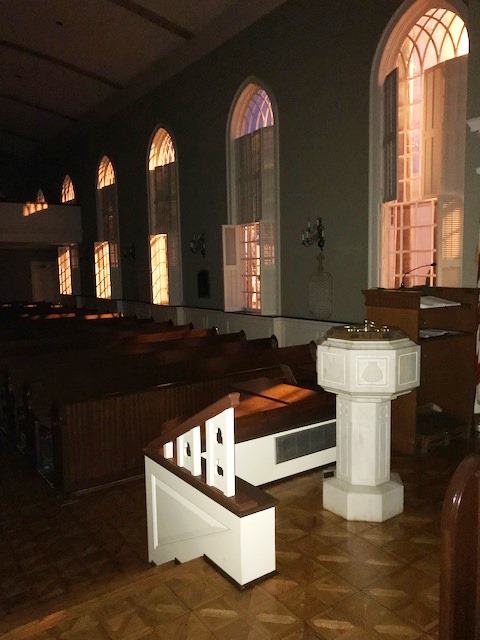
Today this scripture has been fulfilled in your hearing. Luke 4.21

Father Roger Allen, Rector of St. James Episcopal Church, Marietta, said that this very short sermon by Jesus is long enough to have all the qualities of a good sermon: authority, fulfillment, promise, and presence.

The other scriptures assigned for Sunday related in a strong way.

There's the story from Nehemiah of Ezra reading the newly found book of the law to the people of Israel - including those who had returned from exile in Babylon. Hearing the law as if for the first time, the people bow their faces to the ground and weep. But Ezra tells them to celebrate: "Go your way, eat the fat and drink sweet wine and send portions of them to those for whom nothing is prepared, for this day is holy to our Lord; and do not be grieved, for the joy of the Lord is your strength."

Fr. Roger wraps "fulfillment" around the shame of the people when the authority of scripture has brought them to acknowledge their faults. There's the "promise" of God's forgiveness and "presence" - the joy and its strength is to be shared now, not in some future time.

Psalm 19, appointed for the day, is my new favorite:

The heavens declare the glory of God,
and the firmament shows his handiwork.
One day tells its tale to another,
and one night imparts knowledge to another.

The psalmist says that the message doesn't need words to be understood. The sun comes forth like a bridegroom from God's pavilion and rejoices like a champion to run its course. The whole creation knows God and the sun serves God, and it's all very good. [Not thinking of Psalm 19, I expressed a similar idea of sunshine in a poem Solar Power]

The poem is so evocative and joyful that it could end here and be fully satisfying. The Oxford Bible commentary suggests that someone later may have realized that the song suggests you can know God from nature, and thought it wise to add explicit connections to the revelations of God to Israel.

The other readings are so positive that Paul, even while scolding the status-conscious Corinthians, sounds like a motivational speaker. Head and foot and hand are part of one body, he says, and God has so arranged the body, giving the greater honor to the inferior member, that there may be no dissension with the body, but the members may have the same care for one another. from 1 Cor 12.12-31. Bottom line, Fr. Roger said, "You are not alone."

The nine word sermon by Jesus is his response to Isaiah's proclamation of release to the captives and recovery of sight to the blind, the end of oppression and the year of the Lord's favor Luke 4.14-21.

So even in COVID church, even though it was Rite I, even without music, even though I was socially distanced, masked, and squeamish about sharing in wine -- I left feeling reassured for the long haul.

Thursday, January 20, 2022

Memory as Spider Web: Rich Metaphor

"If history is a spider-thread...," then, what? This metaphor suggested so much about time and memory that I paused reading Adrienne Rich's poem "Towards the Solstice" to draw out some of its implications:
  • memories stick to a place, and the place shapes the way I see the memories
  • memories, like webs, connect things that are apart
  • I see memories of different times at one time
  • I can see my present self implied in my past, as I can see the day clearly through a web
  • I'm not conscious of web or memory until something makes me focus
  • as patterns make a web, repetition marks time
  • when I follow a thread of memory, I feel I'm reaching back to my center
  • I can get caught up in memory
Rich adds that a web is "spun over and over though brushed away," as memories persist. She seeks "rites" or "the right rune" to exorcise the memories:
to ease the hold of the past
upon the rest of my life
and ease my hold on the past.

The poem is a kind of ghost story, as, referring to others from her past still present, she waits "for them to make some clear demand."

Earlier, the poet writes, "I am trying to hold in one steady glance / all the parts of my life." So, in present tense, she describes her property both barren under snow and green under rain. The merging of the seasons throughout this long poem is a funny, eerie conceit that sharpens our focus.

The spider web comes back at the end, when the poet, house-cleaning, brushes away a literal web. That's a playful touch that goes with her playfulness with words. For example, I enjoyed seeing thick snow as "a quilt of crystals" and the juxtaposition of "burdock" with "burden."

"Toward the Solstice" appears in Home, 100 poems on that theme selected by editor Christian Wiman (New Haven: Yale University Press, 2022). I've not read much of Adrienne Rich; I need to add her to my list.

I draft a poem a week for another blog First Verse, hoping to grow as a poet while I absorb lessons from poetry pros every day.

Tuesday, January 18, 2022

Remembering Patty Mozley (January 6, 1947 - December 30, 2021)

An early draft of The Walker School's emergency preparedness handbook ended each page the same way: Call Patty Mozley. She was so steady, responsible, and resourceful.

I assisted her with numerous 8th grade plays, and learned from her to be calm in the throes of what looked like chaos.

She elevated hospitality to a ministry. She gathered diverse guests to her table, where choice wine and exquisitely prepared dinners engendered warm, friendly discussion.

Now that her illness has done its worst, we can remember just her many years of strength, character, and kindness.

Monday, January 17, 2022

On MLK Day: Andrew Young with Killer Mike

On this day when Martin Luther King, Jr. is being honored, I've spent some time listening to Andrew Young.

Ordained a minister in his 20s, close to 90 now, Andrew Young has been protege of King, a congressman, President Carter's UN ambassador, and mayor of Atlanta. Recently he spoke on camera with Atlanta rapper and podcast personality "Killer" Mike to remember King and other civil rights figures.

The little old man in his tweed jacket and sweater vest, pudgy and puffy, would seem to have little in common with the large man in red sneakers and Bears shirt, but they reminisced about Mike's time on Mayor Young's Youth Council at age 15. I've heard Mike on the NPR comedy quiz show Wait, Wait, Don't Tell Me, where he was flamboyant and jovial. With Young, he's deferential, encouraging the older man with regular nods and "Yes, sir."

Mike wonders if Young developed more as a persuader than a preacher. Young says he has always struggled to be reasonable and calm, despite practice.

Just because you're good and decent and want to be righteous doesn't mean that you don't have a pot boiling inside you.... There's a streak of violence in everybody, but you've got to know: that's not where your strength is.

Growing up a black boy on a street in New Orleans between Irish and Italian businesses and the Nazi Party HQ, he said he developed his chops for being an ambassador before he knew what that meant. He learned to be "aggressively polite."

In this interview, Young shared one story from his ambassador days, a visit to P. W. Boethe, the face of intransigent white minority rule in South Africa. Boethe pulled Young into his office by the wrist and slammed the door, as if to keep anyone from seeing him in the same room with the black American. Boethe quizzed him on black-white relations in America: How did he get white votes for Congress? How much interracial marriage is there? And, the most telling, How long do you think we whites have before all these black people rise up to kill us all? Young offered President Carter's assistance to begin a process of dismantling apartheid, and Boethe followed up within the month.

Mike asked about Malcolm X. Young knew Malcolm X before he met King. "I never saw Malcolm hate anybody. He was the sweetest, calmest man... he never lost his temper." X was there at the back door to give congratulations when King was awarded the Nobel Prize. He heard X give King "total support" but, "it's best for me not to be seen with you." When Mike expressed surprise that these two weren't at odds, Young said, "People caricatured them" and made differences from nuances.

I loved a story Young tells of a hot day in Savannah when he saw officers locking children under 10 in "the paddy wagon" when they were merely imitating grown-up picketers. The cops threw Young in, too. When Young spoke through the only air vent to ask the cops to please drive them to the jail because the heat was going to bake them, the cops closed the vent. So Young told the kids, "They want us to crack. We won't." He had the kids close their eyes and imagine a slow walk to the beach, slow immersion in the cold water. They were shivering, he laughs. When he led them in singing "Wade in the Water," the police got mad and drove them to jail.

It's what his father told him back on that tough street in New Orleans, and kind of what Jesus says, too: "Stay cool."

Saturday, January 15, 2022

Superman and Pokemon in Advanced Middle Age

At 62, I'm still wearing the big red "S" around the house. I've made my nephew a Pikachu-themed self portrait for a birthday card, because Pokemon is still a part of his world as he turns half my age.

So, are we examples of the "death of the grown up?" My dad used to think so; he had me read a book with that title. But I've doubted that the adults of the 1920s or Frank Sinatra era were any more "grownup" in any important way. See Gerald and Sara Murphy: Muses of the Roaring Twenties (12/2007), Rat Pack Redux: Grown-ups ca. 1960 (09/2007), Updike's Couples: What's Adult in Adultery? (06/2016).

I've learned that the popular view of what constitutes growing up is actually an adolescent's idea. I digested ideas about true maturity in articles Richard Rohr's Falling Upward (07/2014) and Beyond Growing Up (06/2014), reflecting on Sacred Fire by Ronald Rolheiser.

Rather, I think the characters that appealed to us in our childhoods live with us in the way that mythological figures do. See my page Boomer Basement for links to many reflections on superheroes, witches, and other characters who populate a late-Boomer's memory.

Either way, it's a great excuse for me to throw in a couple of fun photos.

Saturday, January 08, 2022

"Art + Faith" : Joy and Discovery in Making Church

"Well, duh."

That was my first reaction to artist Mako Fujimura's book Art + Faith: A Theology of Making (Yale University Press, 2021). I've always experienced my faith through the arts. (see how)

My second reaction is, Fujimura's idea to integrate art-making with "doing church" might bring new seekers and new commitment to an Episcopal parish.

His idea might also alienate parishioners who've told me they're just not creative. Fear not! Here's what I know from teaching middle school:

  • The difference between an artist and anyone else is not talent or creativity, but only the curiosity to see what emerges if they keep working on a project.
  • That's why making art is a way to discover something.
  • That's why making art is also (1) as hard for a pro as for a novice and (2) a joy.

Let's see what Fujimura has in mind, and then look at possible applications to St. James of Marietta GA.

[PHOTO: Quilt makers at St. James Church honored our change-ringers. Each color represents a different bell in St. James's tower; the sequence never repeats during this set of changes.]

Practicing Resurrection

Fujimura wants Church to appeal to his friends who, when asked their religion, check "none." These "Nones" find spirituality in art, not in church. At the same time, Fujimura doesn't want to alienate Christian friends who are suspicious of unbridled self-expression.

So Fujimura does not limit his idea of "art" to what's in galleries and concert venues. For him, the salient characteristic of art is that something be made, not for utility -- not just for utility -- but for love (18). He finds numerous examples of "making" in our tradition. In Scripture:

  • God creates for love
  • Adam names the creatures
  • craftsmen make the Ark of the Covenant, their names recorded in Exodus for posterity, their work described with loving detail
  • the woman at the last supper anoints the living Jesus for burial
  • Jesus favors storytelling and metaphor to express his vision
  • Poetry fills the Bible in psalms, prophecy, and Paul's letters
  • Apostles are works of art in their transformation, Fujimura says
Our liturgy, its words and music, is art. I would add that the Eucharist, originally a pot luck "love feast," has become today a kind of musical drama that we all participate in. [See my short essay Liturgy as Theatre (03/2013)].

Fujimura also finds the Christian world view reflected by secular works of art. Seeing a movie or novel, he would have us ask, where is God in the world of this work? Sin? Judgement? Redemption?

Fujimura reframes "making art" as "practicing resurrection" (147). By "resurrection," he doesn't mean "resuscitation" but the "new creation" we read about in apocalyptic scripture. He explains that the word translated "new" isn't neo but kainos -- metamorphosis, like caterpillar to butterfly. He likens this to the Japanese art called kintsugi, "new newness," exemplified by a broken tea cup that's not just repaired but reimagined as an amalgamation of fragments with gold (ch. 4). Jesus says the kingdom of God will be as different from the life we know as the full-grown plant is different from the seed.

Fujimura finds that "practicing resurrection" appeals both to his evangelical friends and the Nones.

Art + Faith in an Episcopal Church

I know from parish surveys that music and the church's elegant liturgy are high on the list of what draws worshipers to the Episcopal church in general, and to St. James in particular. Can we build on this baseline of appreciation for arts? Might we draw a larger, more committed congregation through an emphasis on what we make?

Sadly, COVID-19 has given us a real-life experiment with what happens when there's no "making" in the church. While we've passively received prayers and sermons, whether online or sitting in pews six feet apart, attendance has fallen. That's not a knock on the preaching of our clergy, but a demonstration of what Fujimura believes:

[U]nless we are making something, we cannot know the depths of God's being....God cannot be known by sitting in a classroom, or even in a church taking in information about God. I am not against these pragmatic activities, but God moves in our hearts to be experienced and then makes us all artists of the kingdom. (7)

He imagines art not just for display or presentation to an audience, but about spiritual formation for the creators themselves. He writes that faith is like an omelette: you can read the recipe, but to get it, you have to make it (61).

Prior to the pandemic, a lot of us were indeed making things at St. James, Marietta. Every week, not just on Sundays, we would sing hymns and anthems, ring bells (hand- and tower-), sew quilts and knit blankets for the needy, guide children through imaginative responses to Bible stories, and set the chancel with linens and silver, candles and flowers, vessels of bread and wine for eucharist. Our church also practiced outreach through hospitality, offering Sunday breakfast and Wednesday supper, providing food and entertainment through the program we call Reach Out Mental Health, and hosting homeless families.

Two of my favorite pieces of art in our church were made by church members. One is a quilt that hangs in our stairwell that represents two communities of art-makers in our parish, the sewing group and the North American Guild of Change Ringers (NAGCR). Squares of different colors alternate in patterns that correspond to our different tower bells ringing changes, never repeating a pattern to the end of the series. (See photo above)

Another is a processional cross created for use during the penitential season of Lent by Bill, a woodworker in our parish. Elegant and polished, it's beautiful, but the wood at the center of the cross has a crack in it. Bill's choice to use that flawed piece at the heart of the cross suggests the suffering at the heart of the season.

How else could parishioners be involved in "making?" Do we envision art classes and rehearsals, concerts and displays -- at what cost of money and time? Would clergy have to vet every piece of work to be certain it aligns with our tradition? What if the work of amateurs isn't so good? Will parishioners be asked to sit through awkward performances during services or evenings? Will artists be offended if we don't hang their work in our halls?

If the Rector appointed me Director of Arts, I'm not sure that I'd do anything more than draw attention to the quilt and cross, the making we already do, and then proclaim: "Let us intentionally make 'making something' a part of whatever we do -- whether we are engaged in worship, study, socializing, or reaching out to the community."

It wouldn't have to be any scarier than when a fellow teacher challenged me to plan a collaborative "active experience" for our seventh graders at the end of every unit after the chapter test. She knew what Fujimura knows: once they'd learned the facts, our activities would help them to relate their knowledge to their lives.

We already do this kind of artistic thinking in educational activities at our church. Our director of children's education plans collaborative creative experiences with her Bible story curriculum, varying the activities to suit children of different ages.

Adults in EfM (Education for Ministry) practice "theological reflection," a process that might as well be called "thinking like poets" as they explore an event or text with imaginative empathy, memory, Scriptural analogies, and metaphors. Often, they draw all the threads of their discussion together into a "collect," a concise form of prayer that comes close to being poetry. [See Where Prayer Meets Poetry (05/2020)]

Even making a list is creative. I asked my adult EfM class, "What ministry do you imagine for yourself? How could the church be of service to YOU in this?" As they answered, they grew more animated:

  • to provide a type of caregiver support group – “caregiver” broadly defined (illness, parenting, eldercare) -- that takes “me” out of the equation, helping the caregiver to REALLY see the person they’re caring for. Church? Bible study can help, but a group with activities that everyone does together is also important. (Art, music, poetry, conversation…)
  • to create a program that might be called "The Inspired Retired" for retirees to find new ways to become engaged with (1) their own ordinary routines and (2) others
  • to fulfill the 12th step, i.e., to work with others struggling with substance abuse.
  • to make a deliberate effort to engage with people as equals -- especially strangers we encounter, in public, even at the drive-through -– a ministry one conversation at a time. Church could be a place that welcomes people in this way.
  • to pay attention to students who need advising to get through myriad hoops and obstacles during this particularly difficult time.

"Making something" might be sharing participants' insights on video, or using software or art materials to create an image for what they've learned. The subject matter may not be Scripture, but about the church community, about traditions with food and decorations, about life experiences. For example,

  • The most intense half hour I shared at a weekend retreat with EfM mentors was when we were given 30 minutes with old magazines to find images that represent elements of our spiritual lives, to cut and paste them into a circle (making a mandala).
  • When I sent adults of in my EfM class to roam the church campus with their phones to bring back images that "spoke" to them strongly of our faith, they returned exhilarated and eager to share. (My images were the ones in this article of the quilt and the cross.)

No activity has to be shared beyond the small group, but, posted on the church's social media, such "makings" would show online scrollers that we are a church where people learn, search, wonder, think, connect "church" to their own lives, the larger community, and to popular culture.

Bottom Line from Self-Appointed Director of Arts

Art takes work more than talent; it's more a joy than a grind; it's a process of discovery that goes beyond the delivery of a message; it doesn't have to be about religion to be religious.

Fujimura writes what our experience at church bears out, that thinking like a "maker" is a way to "the deepest level of knowing" (Fujimura 72), an intensifier of our response Scripture and liturgy. In an interview, Fujimura says,

The arts are a cup that will carry the water of life to the thirsty. It’s not the water itself; it’s the vessel. What we are doing in the church today is we are just picking up water with our bare hands and trying to carry it to the thirsty. We can still do it, but the effect is minimized by not fully utilizing what God has given us. (Faithandleadership.com)

Our rector in his Christmas Day sermon this year had a message compatible with Fujimura's. He emphasized that we all should be living out our thanks for the gift of the incarnation. Teaching and debate are not the only ways to do that, he said.

Art is also a builder of community through collaboration, and a value in itself (17-18).

When we re-boot church after the pandemic, what additional "making" could involve parishioners, and how else can we make everyone aware of what we're doing?

Thursday, January 06, 2022

Poets on Prayer: Mary Karr and Christian Wiman

Thirst is the truest knowledge of water.
  - Mary Karr, "Philemon: Notes from the Underground"

Mary Karr writes that in a poem about needing to pray. By serendipity, I opened to that poem on the morning after our EfM (Education for Ministry) class had discussed how spirituality is a thirst for relationship with the transcendent, and prayer is where God meets us in our need. It's doubly serendipitous that the class also discussed a whimsical poem by Christian Wiman that spoke to us about another aspect of prayer.

We had read an essay by Urban T. Holmes from "The Spiritual Person" in Spirituality for Ministry, The Library of Episcopalian Classics (Harrisburg, PA: Morehouse, 2002). We all appreciated Holmes's idea about prayer as a space where "our freedom meets God's vision," though we haven't lost our childhood notions of prayer as a wish list for our Santa in heaven. Holmes rates that kind of "petitionary prayer" at the lower end of a continuum. The upper end of Holmes's continuum is wordless communion with God. As a word guy who savors the lines in our Book of Common Prayer, I'd had trouble imagining that until Holmes likened that sort of prayer to the silence between a loving couple.

I got help with that idea of a wordless prayer when, procrastinating, I re-opened Mary Karr's collection Tropic of Squalor. I'd read all the poems except a few at the end of a series she calls "The Less Holy Bible," so I turned to those. One tells of mailing an ex-lover's belongings. "Leaving the post office," she writes, "I enter / the sidewalk's gauntlet of elbows" and she prays to "Christ, my Lord, my savior, / and my good brother," something like the "Jesus Prayer" that our class had discussed. Her foul mood shifts as she prays for everyone she sees. A toddler with a green apple "can become baby Jesus," and an ugly street incident is redeemed ("Petering: Recuperation from a Sunk Love..." 69-70).

Karr's line about "thirst" caps a poem in which the poet describes a dreary subway car. "And in the evil of my pride," she tells God, "I get / to forget I am You-formed" though she sits "among other similarly shaved animals." When she puts her hands together, she sees her fingers as "unlit tapers" that "burn" for God. She calls this one "Philemon: Notes from the Underground" (71), relating the epistle in which Paul asserts the brotherhood of a Christian slave and his owner Philemon to Dostoevsky's novel about a snob resentful of everyone around him. In this context, the poet's thirst for transcendence is itself an entry into knowledge of God.

After our discussion of prayer in EfM, we subjected a poem by Christian Wiman to a process of "theological reflection," a creative search for ways that our religious traditions relate to life experiences, including literature and movies. I brought Wiman's "I Don't Want to be a Spice Store," which begins with a snarky description of pretentious merchandise in an exclusive store in a town where shops don't open before noon and "even the bookstore is brined in charm." The poet writes that he wants to be open and available all the time (we thought of Buc-ee's and 7-11) and carry just the necessities:

Something to get a fire going
and something to put one out.
A place where things stay frozen
and a place where they are sweet.
I want to hold within myself the possibility
of plugging one’s ears and easing one’s eyes;
superglue for ruptures that are,
one would have thought, irreparable,
a whole bevy of nontoxic solutions
for everyday disasters.
  - Wiman, "I Don't Want to be a Spice Store"
  from Survival is a Style (New York: Farrar, Straus, and Giroux, 2020)
The poem ends with the store empty but "humming" at 4 a.m., door unlocked, waiting patiently. Several of us highlighted different parts of the poem before one man observed that, in this way of looking at a convenience store, Wiman had given us a memorable image for what prayer can be. From the list of necessities, to the intercessions for the mending of others' brokenness, to the patience that waits for God to enter in, it touches on all the points we made during our discussion of the essay.

It's a model of prayer in one other way: It doesn't have to say all that to say all that.

Blogposts of Related Interest
Mary Karr writes that poetry is prayer in an essay that concludes her 2006 collection Sinners Welcome. She collects poems about how her son brought her out of her self, poems about the Incarnation of God that make familiar Bible stories uncomfortably physical, poems that express gratitude, and some that don't. See Discomfort and Joy (06/2020). Her afterword and a 1993 poem "Etchings in a Time of Plague" figure prominently in a piece I wrote about a form of prayer that comes close to being a form of poetry. See Where Prayer Meets Poetry: The Collect (05/2020).

Beyond Belief in My Bright Abyss (08/2013) concerns a book of essays by Christian Wiman, once fundamentalist, then atheist, now a kind of believer again. There's also my review (06/2013) of the poet's collection Every Riven Thing.

Saturday, January 01, 2022

Song at Midnight for the New Year

[PHOTO: On New Year's Eve, Brandy and I are sheltering from tornado warnings in my newly refurbished basement. Here's a photo from October of the two of us in that same space.]

During 12 days of Christmas, to the puzzlement of my dog Brandy, this Episcopalian is singing a different Christmas hymn every day with the Morning Prayer service. This, the sixth day, I turned to one of the most familiar ones, "It Came Upon a Midnight Clear." I've known the first verse for more than 50 years; the other verses were new to me. The message struck me as a good one for a new year.

I wonder how many of us know what "it" is? It's not the baby Jesus, but the song of the angels who proclaim peace and goodwill:

It came upon the midnight clear,
that glorious song of old,
from angels bending near the earth
to touch their harps of gold:
"Peace on the earth, good will to men,
from heaven's all-gracious King."
The World in solemn stillness lay
to hear the angels sing.

The words are by Edmund H. Sears (1810-1876) a Unitarian pastor, author, and abolitionist in Massachusetts. The tune familiar to most Americans is by Richard Storrs Willis (1819-1900); the other tune is by Sir Arthur Sullivan of H.M.S. Pinafore fame.

The second verse tells us that the song still floats o'er the weary world, though we're too engrossed in our Babel sounds of conflict to hear it.

Verse three laments that the world has suffered long during two thousand years of wrong. He implores us, O hush your noise and cease the strife / and hear the angels sing.

He takes comfort from Scripture that the Lord will return and make everything right at last:

For, lo! The days are hastening on
by prophets seen of old
when with the ever-circling years
shall come the time foretold
when peace shall over all the earth
its ancient splendors fling
That's a pretty far-fetched image, of "peace" having to "fling" its "ancient splendors" -- did we have peace in ancient times? Nope. He continues
and all the world [shall] give back the song
which now the angels sing.

That is, one day, we'll all be in the same hymnal on the same page (which would be #89).

I've been reading work by theologian Verna Dozier and poet Christian Wiman who both pooh-pooh the idea that some day things'll be bad enough that God will just step in and make everything right. It's a pleasing idea, but Dozier would say, and Wiman, probably, would agree, "Naah, it's up to us."

It's an election year. It's a time of revised expectations because of the COVID "omicron" variant. I'm reading a biography of Grant, identifying with the feelings he had when family and friends were vicious in their divisions over slavery, partisanship, and secession.

My comfort comes from assurances in the Bible, such as this evening's appointed Psalm 90, and the knowledge that we've been here before, and somehow the people born in that time got through it and recreated the world I was born into.

Forget about "Happy New Year." I'll settle for a year of taking deep breaths and backing off.

Friday, December 31, 2021

"The Heron's Cry" by Ann Cleeves: #2 in the Two Rivers Series

It's a great moment in any crime novel when the detective realizes, "Oh, I've been looking at this all wrong." There's a sudden burst of energy, maybe a laugh, like when you suddenly notice the little detail that makes a cartoon funny.    

Before that moment blows us away in The Heron's Cry (New York: Minotaur Books, 2021), Ann Cleeves diverts us with characters we mostly like, pursuing suspects we mostly don't.

One significance of the title is how her chief detective Matthew Venn makes his husband think of a heron "just willing to wait. Entirely focused on their prey [and] silent. I'm never quite sure what you're thinking" (236). We do know what he's thinking, how he questions himself silently even while he's questioning a witness or directing his team.

Ditto, the team, detectives named Jen and Ross. Cleeves alternates chapters among these three detectives as they investigate the murder of a wealthy do-gooder. They have complementary strengths -- Jen's intuition and emotional sensitivity, Matthew's cerebral doggedness, and Ross's ready - for - action - and - then - can - we - go - home - please impatience. Already, two books into the series, they are influencing each other.

(BTW - My strongest emotional memories from other books by Cleeves involve the lead detectives' seconds: a young police detective who realizes suddenly that his daughter is in danger, and a diffident country cop who overcomes self-doubt on a mission to London and does just the right thing.)

Our interest in the detectives is one feature that keeps us reading; interest in the cohort around the victim is another. The victim is a benefactor of the arts. We meet a pair of artists dependent on his generosity, and his daughter, whose glass sculptures are weaponized in his murder and another. There's a curious couple who are sort of tenants, sort of live-in servants.

Many of the characters relate to suicides that happened long before this story starts. The murder victim was involved in suicide prevention counseling. The detectives uncover a web-based community that encourages dark ideations.

As this second novel in the Two Rivers series explores issues around suicide, the first one explored questions surrounding adults with intellectual disabilities, their safety and independence. In both novels, the themes emerge naturally from the situations. While there's no authorial preaching, we do develop empathy for people with different perspectives. Such themes give resonance to a genre that can be just an exercise in puzzles and procedures.

I'm looking for more stories to happen in Venn's town of North Devon, between two rivers.

Wednesday, December 29, 2021

Virtual Bike Ride on Maine Street

←← | ||

287 miles from Boston to Bar Harbor
November 21 - December 29, 2020
After my visit to Bar Harbor in July 2013, I wrote how different things are in Maine,
where billboards evidently aren't allowed, where pine trees are shaped like Christmas trees, and white-barked birches fill forests; where my friend Suzanne and I drove 100 miles without seeing traffic, a truck stop, a shopping mall, or McDonald's. These are high on my list of things I don't want in my life any more.
I hear that's a common reaction. A Mainard on NPR said that many people move to Maine for a life of picturesque isolation and leave after one winter.

That would be me. My doctored selfie shows Bar Harbor's Main Street during this week when the temperature there never topped 34 degrees Fahrenheit. I purchased that sweatshirt from Acadia National Park nearby when the summer air was a little too cool for me at the summit of Cadillac Mountain. This week, I had to wear it riding because my actual location northwest of Atlanta was gripped by temperatures in the lower 60s. While Bar Harbor's tourism office VisitBarHarbor.com makes winter there sound great, I'm okay with virtual travel.

←← | || Use the arrows to follow my bike tour from the start.

Monday, December 27, 2021

A Silent "Silent Night" & Other Tales from Omicron Christmas

We kept silent during "Silent Night" at the Christmas Eve service. Paul Kelley, organist at St. James Episcopal Church, had rehearsed lots of music with the choir, but the Omicron variant's rampage through our county made it prudent for us to confine exhalations to our own socially-distanced spaces. He added chimes to the melody for a consolation.

Though the advent of Omicron overwhelmed the Advent that our rector Father Roger Allen had planned, he still produced messages for the season that I was glad to hear.

The angels' proclamation to the shepherds to "Fear not!" certainly seems like something we need to hear this year, Father Roger said. He brought us an apposite reflection by author Philip Yancey about how he takes great effort to care for the fish in his salt-water aquarium, yet they dart for cover every time he approaches. He wants them to "fear not." He thinks, if he could only become one of them, they might understand. Father Roger offered this as a good analogy for the Incarnation of God in Bethlehem.

After the sermon, Fr. Roger explained his rationale for canceling plans for a pageant, choir, guest musicians, bells, and lots of congregational hymns. Some parishioners told him they were annoyed, while others were relieved not to be caught between leeriness of exposure and reluctance to let the choir down (that describes me). He read an apt portion of a children's book, referring to himself as the Grinch observing how denizens of Whoville celebrate even without the decorations, gifts, and bells.

After that evening's services, Paul went home expecting to have late dinner prepared by his adult son, but, no. Apologizing, the son ordered pizza instead -- and the delivery boy turned out to be his older brother, who had come in from Baltimore to surprise their dad. Happy ending!

On Christmas Day, Father Roger told the story of a vicar who accosted a parishioner after the Christmas Eve service, saying "We need you to serve in the army of Christ!" The man assured the vicar he did serve. "Then how is it we see you only Christmas and Easter?" The man whispered, "I'm in the Secret Service!" Father Roger encouraged us not to keep our faith secret.

In the same vein, he asked us to think about gifts that we've given. How were they received? With surprise? joy? thanks? Or did the receiver seem distracted? Did they take the gift as just something due? The Incarnation is a gift -- how are we receiving it? Good question, because we know how we feel when the gift doesn't get the reaction we expected. We can have a little empathy for our heavenly Father and try to do better.

Finally, Father Roger gifted us with something he saw Christmas Eve. While Paul played "Silent Night" for a silent congregation, a family in the back followed along in sign language.

Two More Christmas Gifts
Mom's facility had to cancel their Christmas buffet, but sister Kim and I were able to enjoy salmon, potatoes, and chocolate cake with Mom in her room.

The next day, Sunday, I went to the early service, something I rarely do, because my weather app told me there'd be three hours of warm sunshine in the early afternoon, a great gift for a cyclist.

Find a list of my other articles covering our experiences over the past decade in my page Dementia Diary, and a lot more about church at my page Those Crazy Episcopalians

Friday, December 24, 2021

Falling in Love with West Side Story -- Again

Before I could read, I thrilled to Mom's LP from the 1961 movie West Side Story. Leonard Bernstein's music created tension and Stephen Sondheim's lyrics were scary -- Something's coming,/ I don't know what it is, but it is...down the block, on a beach, under a tree, then it's at the door, where I prayed silently, "Don't open the latch!" I imagined it was the Blob.

After TV aired the film in my 6th grade year, my friends and I listened to the music for weeks. This musical wasn't kids' stuff; this was serious!

After studying Shakespeare, I appreciated how the playwright Arthur Laurents had adapted Romeo and Juliet.

But then it became cliché, subject to parody; gun violence made Jets and Sharks look tame; and, while I never stopped loving Bernstein's music, hearing his West Side Story suite on public radio every blessed request day grew tiresome. Steven Spielberg's remake seemed a bad idea: I believed the material had lost its freshness and its edge.

[PHOTO: Alvarez, DeBose, Spielberg, Zegler, Elgort]

Fresh
The cast of Spielberg's West Side Story makes the characters fresh. Michael Faist, a lean and hungry "Riff" displays bravado for his gang "the Jets" but his deep vulnerability comes out in bitterness when his closest friend "Tony" (Ansel Elgort) seems to have outgrown the gang -- and him. From a bit of background added to the dialogue, we know that Tony is the closest thing he has to family. Like Shakespeare's "Mercutio," Riff jokes right up to the moment of his death, but Faist delivers quips as challenges. Riff's silent response to a loaded gun makes an old man laugh, but Faist is intense, not funny.

On the other side of the white-Puerto Rican divide that defines the story, David Alvarez plays "Bernardo" as a boxer who's as quick to laugh as to fight, always dressed to impress. Alvarez is a fine singer and great dancer, but it was his "gravitas" that impressed Spielberg. While Riff sang that being a Jet makes him "a family man," Bernardo revels in his actual family, delighting in his lover "Anita" (Ariana DeBose), protective and fond of his little sister "Maria" (Rachel Zegler). His confrontation with both women at breakfast is unexpectedly funny: as he tries to be the strong and wise paterfamilias, they pick apart his decrees, and he's reduced to spluttering into his scrambled eggs.

When Tony and Maria fall in love at first sight, as hackneyed as that could be, the actors' wide-eyed surprise and joy land the moment. During their awkward dialogue and an elegant dance behind the bleachers, we fall in love with them. There's magic in the camera work, too, as dozens of frenetic dancers between them seem to fade away. Bernstein's music underscores the moment by a sudden shift from super-heated Mambo to a gentle cha-cha-cum-minuet. The actors prolong that magical moment when they sing the familiar songs "Maria" and "Tonight" as beautifully as I've ever heard (around 50 versions), high notes and harmony expressing their exuberance.

We're enchanted. Although we know they're all doomed, we're lured into a hope that it'll all work out for those kids this time.

Sharp Edges
To sharpen the edge of Arthur Laurents's original script, scenarist Tony Kushner and director Spielberg redefine the context for the gang war. This time, the turf they're fighting for is marked for demolition to make way for Lincoln Center -- the very same abandoned streets where the 1961 film was shot. For the first image of the film, a camera tracks along yards and yards of wreckage on the ground until suddenly, a door opens upward and Jets climb out. We're disoriented; and so in a way are the Jets, as Spanish has replaced English in streets they used to know. Their own futures are closing shut. Police Lieutenant Shrank berates them as nogood sons of the only immigrants who ever failed to advance out of the neighborhood. When they sing that they rule "the whole ever mother lovin' street," they're posed like fighters, kings of the hill -- but the actual hill is rubble. The story isn't just boys' behaving badly; it's existential despair.

The Puerto Ricans, on the other hand, are upwardly mobile. Bernardo, Anita, and Maria all have jobs, nice clothes, and plans for the future. Bernardo has promised Maria to an awkward young man named Chino, whom he bars from the gang to save him for college. Bernardo plans a return to Puerto Rico with money and children, but Anita has sights on building a business in New York. Their playful banter develops in the song "America," a witty catalog of the obstacles they're overcoming. Always a show-stopper, the song in this context expands to involve their entire community in a celebratory dance. Even the traffic is choreographed: three cars hit their brakes on three successive beats of a measure!

[Ariana DeBose and David Alvarez as "Anita" and "Bernardo"]

Song and Dance
The music is sharp as ever, due in part to a choice Bernstein made back in 1957. The first two notes we hear are three whole steps apart, an interval we don't hear much in popular music. Called the "tritone," it's a musical edge, a literal tipping point between fa and sol in the familiar scale. Because we are conditioned to hear the note tip towards one note or the other, the repetition of the tritone makes us as tense as if we saw a tightrope artist waver. This effect made "Something's Coming" scary for me as a kid, as the tritone repeats in the accompaniment and the melody. The first two syllables of "Maria" make a tritone; it's the basis for "Cool," and it even peppers the comic song "Gee, Officer Krupke." The tritone lurks in almost every number.

Yet Bernstein's music can be exuberant and joyful, as in "America" and "Tonight," or tender, as when Tony and Maria sing "One Hand, One Heart," their voices overlapping on the ominous lyric, "Even death won't part us now." Anita's furious aria "A Boy Like That" is pitched in her highest range, close to screaming at Maria with the full force of Gustavo Dudamel and the New York Philharmonic behind her, making very sweet and very sad the moment when her fury melts into harmony with Maria's anthem, "I Have a Love."

All the dances flirt with fighting, and all the fights teeter on the edge of ballet. In Jerome Robbins' original choreography, the song "Cool" is a highlight, as the Jets try to hold it together after the fatal rumble. In this version, "Cool" is re-imagined as a confrontation between Riff and Tony. When Tony calls Riff a "yo-yo schoolboy" in a bid to prevent the rumble, he's only deepening the rift between the young men. The dance grows out of a dangerous game of keep-away with Riff's loaded gun.

[PHOTO: Faist and Elgort as "Riff" and "Tony"]
In the 1961 movie, "Gee, Officer Krupke" is comic relief. With slapstick staging, the boys mock the runaround they get from the authorities in their lives. It always had a subtext of anger, but this version, set in the police station, brings rage close to the surface. The horseplay is aggressive, even vicious.

Other choices by Spielberg and Kushner palliate faults that have embarrassed Sondheim since 1957.

  • In "Maria," young lyricist Sondheim gave the actor nothing to do but stand and repeat that he liked the young woman's name -- because, what else does Tony know about her? Exasperated, the director Jerome Robbins told Sondheim to stage it himself. (Sondheim learned from then on to write every song with action in mind.) For this version, Spielberg follows Elgort as he strides through the nighttime streets exulting at the top of his lungs. In gentle homage to "Singing in the Rain," there's a puddle for splashing and a street cleaner who looks askance at the singer.
  • I've seen Sondheim shudder at his overripe poetry, "Today the world was just an address / a place for me to live in / no better than alright." The words of the song "Tonight" haven't changed, but it's okay if they're a bit over-the-top because Spielberg and Kushner go back to Shakespeare to punch up the comedy in this updated balcony scene. Like Romeo, Tony has to beat obstacle after obstacle to get a kiss: the neighbors can hear them, the fire escape is out of his reach, there's a grille in their way. Like Juliet, Maria is worried but kind of enjoying his plight, and she forgets why she called him to come back. Because they're a little foolish in this situation, their fond lyrics are forgivable. It helps that the first line of this song, "Only you / you're the only one I see" is what we experienced when they met, and that the line is doubly poignant when we hear it again later.
  • Sondheim was proud of clever rhymes he fit to Bernstein's lilting waltz for Maria, "I Feel Pretty," before Sheldon Harnick (lyricist for She Loves Me and Fiddler) pointed out that a girl learning English shouldn't sound like a guest in Noel Coward's living room. Bernstein didn't care about that, so the words remained. But Spielberg and Kushner make it right by finding a credible way to set the song in a place very much like Noel Coward's living room. I was delighted, and I think Sondheim was, too, because he told Steven Colbert he loved the ways that songs were re-imagined for the movie.
  • Sondheim regretted that, given the music for "Somewhere," he set his least significant syllable on a high half note, giving it ridiculous prominence: "There's AAAAA place for us." As this is the go-to song for classical musicians' pop concerts, I've heard lots of opera singers go full-throttle on that "a." For this remake, Kushner gives the song to "Valentina," a new character who replaces the shopkeeper "Doc" from the original script. As Doc's widow, Valentina is Tony's employer, surrogate mother, and confidante (he sings "Something's Coming" to her). She's also Puerto Rican. When things are going wrong, this little old lady sings "Somewhere" alone in her shop, gazing at a photo of herself with her husband, expressing her hopes for Tony and Maria. In that setting, the actress can under-sing the melody and act it, instead. Kushner wrote this part for Rita Moreno, who won an Oscar for playing "Anita" in 1961.
Many iconic moments are left as they were in 1961, barely re-touched, such as the "Jet Song," the final scene, and my personal favorite, the "Tonight" Quintet. That was my first exposure to the technique of layering multiple characters' perspectives in one slam-bang number, cutting from Jets, to Sharks, to Anita anticipating a hot night, to Tony and Maria foolishly believing they can stop the violence.

Spielberg has said that he loved the original; he has made me love this material again. I want everyone else to love it, too. Ecstatic reviews didn't draw big audiences to theatres in its first two weeks; my hope is that this film will get the audience it deserves in time.

Monday, December 06, 2021

New Opera "Eurydice": Something Nice

On December 4, the Met broadcast in HD the new opera Eurydice, music by Matthew Aucoin, libretto by Sarah Ruhl, based on her play of the same name. The title character's name appears to combine the prefix eu- meaning "pleasant" with dice meaning "speech," reminding me of Mom's dictum, "if you don't have something nice to say, don't say it." So I'll be writing mostly about the captivating first hour.

Matthew Aucoin's orchestral prelude instantly created an atmosphere with delicate colors, a propulsive pulse, and ominous shifts of harmony.

The first moments with the title character and her lover Orpheus on a beach were sweet and a little puzzling in a way that intrigued us. Orpheus seems at first to be mute, drawing Eurydice's attention to the flight of birds with a sweep of his hand; she translates. Once a winged double for Orpheus descends from above, Orpheus and his muse sing his thoughts in harmony, Orpheus a baritone, his double a counter-tenor. By this very effective conceit, we understand that, while Orpheus may be affectionate and devoted to Eurydice, his attention is divided between his love and his music. For the rest of the opera, the energy in the interaction of these two voices generates a lot of good will.

[PHOTO: Eurydice, Orpheus, and his double.]

The story is well-known, so we appreciate the significance when Eurydice, teasing her lover, makes him walk ahead of her without looking back. Moments later, he sweetly ties a string around her ring finger to remind her of his love always. When string appears again in this story of loss and memory, we remember, and it's telling.

Another great invention of the librettist is to show us Eurydice's late father in the underworld. Having evaded his prescribed bath in the river of forgetfulness, the father retains his literacy and his love for Eurydice. Though he writes his daughter a tender blessing for her wedding day, he cannot deliver it. The plight of this character and, later, his care for Eurydice in the underworld, are strongly affecting throughout the opera, right up to his last words.

Hades, lord of the underworld, gets laughs for being so over-the-top creepy. Played by tenor Barry Banks, he's a plump and pasty bald man dressed like a Rat Pack wannabe. He seduces Eurydice to his swinging 60s bachelor pad, offering to show her a letter from her father. I've read on the website that he engineers her falling down the stairs to her death, a little detail that I totally missed.

In an interview backstage with host Renee Fleming, Banks admitted that he's challenged by a vocal part for which no entrance is lower than B-flat, but he also enthused about the logic and singability of the composer's lines.

The backstage interviews before the curtain and at intermission are always a highlight of these HD productions. These professionals are so collegial, and occasionally goofy in a gee-whiz-I'm-on-screen-with-all-these-great-stars kind of way. The principals and creative team expressed their appreciation for the music and libretto, and also their commitment to the project.

After intermission, the story went to hell. Still trying to say something nice, I'll list some intriguing themes that emerged:

  • The language of stones
  • The power of written language. Sometimes characters who seemed puzzled by pages of a letter stood on the paper, perhaps suggesting the limits of written language.
  • Memory loss. Some of the interactions in the underworld were like those that I see in my mom's memory care facility.
  • A woman's conflicting feelings for two men in her life, her father and husband.
  • The nature of love for a creative artist.
  • Loss.

Finally, I'll say something nice about a different musical theatre piece, Passion by James Lapine and Stephen Sondheim. Like this opera, its story is schematic, its characters on the edge of being mere illustrations of a theme: a soldier in love with a healthy beautiful woman whose name means "light" gradually comes to love a sickly repulsive woman whose name means "dark." On NPR's Fresh Air, Lapine explained the pains that he, Sondheim, and the cast took to help their audience to understand the characters' motivations for this unlikely story.

Like Passion did, this opera may need some tweaking. I'd work backwards from the moment in the libretto when Eurydice is asked to explain why, at the climactic moment of decision, she did what she did, and she answers, "I don't know." I felt cheated. I don't have anything nice to say about that.

Eurydice
Music by Matthew Aucoin, libretto by Sarah Ruhl, based on her play Eurydice
Conductor...Yannick Nézet-Séguin
Eurydice...Erin Morley
Orpheus's Double...Jakub Józef Orliński
Hades...Barry Banks
Orpheus...Joshua Hopkins
Father...Nathan Berg

Tuesday, November 30, 2021

Sondheim is Alive ( with links to Sondheim tributes )

Sondheim lives. At the time of his death last week, his shows Company and Assassins were on stage in New York, the new film adaptation of West Side Story was ready to hit theatres December 10, and he himself was a character in a film of Jonathan Larson's Tick, Tick, Boom that started streaming around the time. Sondheim shows play around the world 12 months of every year.

That may be surprising, as the "smash hit" always eluded Sondheim, and many of his shows lost money (a lot!) in their original productions.

But Sondheim will live because actors love him. That's the strong message that comes through in tributes since his death.

[PHOTO: Actors and fans gathered in Times Square after his death to sing "Sunday," Sondheim's anthem about art that transforms ordinary life into something that lives "Forever"]

On screen and in print, actors have testified how Sondheim's words and music are so particularly expressive, giving them so much to do. Bernadette Peters said that a quarter note rest in a Sondheim song is there because of something the character is feeling. Patti Lupone suggested to Sondheim that his acting in student productions carried over into his songwriting, and he agreed. When she asked about characters he'd created, he reminded her that his collaborators created them, but he explored them the way good actors do. (He admitted to her that Mama Rose from GYPSY was his favorite - such a monster, and "so full of life.")

In my teens, guided by critics, I loved Sondheim for all the wrong reasons. He revolutionized the art form, he dared to write dissonances in his music, he used the word "Goddam" in a musical, he chose dark subjects.  By touting the difficulty of Sondheim's music and the cleverness of his rhymes, I claimed my own sophistication. 

In the same way, professors and critics teach how Shakespeare advanced the art form, examined dark themes, and wrote dense poetry.  But Shakespeare has lived in spite of being reduced to quiz points and essay topics.   Since Shakespeare's grateful actor friends published his work in 1623, actors and directors have delighted in the challenges of his work. They've related to the characters; they've owned the insights; they've enjoyed opportunities that Shakespeare gives them to show off their range.

Likewise, Sondheim.

I've already seen well-regarded novelists, favorites of mine, fade into irrelevance within a couple of years of their deaths. I expect Sondheim to live on. 

[See my grown-up reflection on Sondheim's virtuosity in music and lyrics. See my Sondheim page for many more articles about him, his craft, shows, collaborators, friends, and competitors.]

Links to Sondheim Tributes

  • Central Synagogue in New York did a solemn, beautiful tribute with thoughtful words and a medley of Sondheim songs that fit the context of a religious service. Synagogue Tribute.
  • A British actor/musician has put together a wonderful video using clips from shows with animated snippets of piano score and lyrics to explain why Sondheim's work is so compelling. He ends with a heartfelt thank-you to Sondheim for the "humanity" (understanding, honesty, acceptance) that helped the author through difficult teen years. See Why Sondheim's Music is so Addictive
  • NPR's tribute by Jeff Lunden
  • NPR critic Bob Mondelo's tribute is both comprehensive and personal. The conclusion got to me: Sondheim always did "Move On," and "now we must, too."(My friend Susan and I chatted with Mondelo about Sondheim's Road Show during our visit to NPR HQ the day we saw that musical.)
  • A New York Times article celebrates Sondheim's lifelong mission to encourage theatre writers and performers, often with typewritten notes.  (I have four examples framed on my wall.)
  • Scott Simon on Sondheim's Essential Lyrics: A Soundtrack for Life is the most personal assessment, and strong. I especially appreciate how Simon draws from the song "Someone in a Tree" for Sondheim's celebration of the particulars in life that we hold in our hearts.
  • Broadway actors sing SUNDAY
  • Patti Lupone's tribute incorporates her interview with Sondheim at his home when COMPANY was about to open, just before the pandemic closed everything down. She focuses on his early experiences as actor, and there are surprises and laughs. She tries to tell him directly "thank you" for all of us and tears up, but he gets the message.
  • Max Freedman, journalist and former actor from a musical theatre family, creates a "playlist" of Sondheim songs by way of showing what the bard of ambivalence taught him in life. It's great!
  • Not a posthumous tribute, this compilation of teenagers telling what Sondheim has meant for them is very affecting. It's posted by the guy who does the wonderful YouTube series Musical Theatre Mash.
  • NPR's list of 10 Sondheim songs we'll never stop listening to
  • Video from PBS News Hour features Sondheim on rhymes, then an interview with critic Ben Brantley and theatre director Eric Schaeffer
  • New York Post obituary
  • Classical music figures including Jake Heggie and Renee Fleming share their tributes to Sondheim
  • An appreciation in LGBTQ Nation focuses on Sondheim's growth from closeted gay man to gay icon.
  • Michael Granoff wrote Sondheim and Me, personal memories of the composer, who was a family friend.

Chris Thile, in Atlanta, Alone

We've seen Chris Thile in Atlanta with his group Nickel Creek and with a large cast of actors and musicians for his variety show Live from Here [see my blog posts of 04/2017 and 05/2018]. He's always been the life of the party, playing off the others on stage.

So what could he do all alone last Monday, November 22 at the vast Symphony Hall of Atlanta's Woodruff Arts Center? In disbelief before the show, several members of the audience took photos of the forlorn stage, draped in black, bare except for a microphone stand and stool.

Thile filled the space and a good 90 minutes with a dozen or more characters. He greeted us as old friends that he hadn't seen in a long time -- which, in fact, we are.

He opened with a suite of songs and followed up with amusing stories about his connections to each one. He brought Bach into the mix, whose persona and imagination are crystal clear when Thile plays his mandolin. Later, he introduced Bach to an admirer, Bartok.

We got to meet young fundamentalist Chris Thile in dialogue with his older agnostic-but-still-searching self, performing songs on the theme of spirituality from his truly solo album Laysongs. He conjured the devil for a 12-minute musical drama "Salt (in the Wounds) of the Earth." He explained, "The voice is Screwtape," a devil from C. S. Lewis's book The Screwtape Letters, "and the mandolin is me." (November 22 happens to be the day in 1963 Lewis died concomitantly with JFK. The Episcopal church honors Lewis on that date.)

Bob Dylan's fare-thee-well song "Don't Think Twice, It's All Right" was a piece of musical theatre. When Thile sang, "It ain't no use to sit and wonder why, babe," the presence of that woman was reflected in his face and tone, and we felt as if we were witnessing the break-up of a tumultuous relationship.

Of course, Thile shared the spotlight with his mandolin, a character with a mind of its own. Between verses, it veered off into other keys, moods, and strange sound effects.

Thile's voice plays many parts. At times it's a crooner, a yodeler, and an operatic countertenor sustaining straight high tones. In a very affecting moment, Thile stepped away from the mic to sing softly with the house.

At age 62, now, I recognized the same mix of ages and types that I found so remarkable 20 years ago when he performed with Nickel Creek at the Variety Playhouse -- teens and their grandparents, and everyone in between - hipsters, ex-hippies, cowboys, churchgoers, Bohemians.

That bodes well for Thile's professional longevity. If mine holds up, I'll see him again.

Sunday, November 28, 2021

Stewardship Message: "The Creator Doesn't Need Our Money, But..."

Good morning. Besides singing with the choir, I work with EfM, and I’m clerk of the Vestry. That means I take notes while others explore options and make hard decisions. That means I have all the fun with none of the responsibility.

But when I was a voting member of the Vestry, I would wake in the night worried because pledges came in so slowly. We saw needs and we saw opportunities, but without pledges to make the budget, our hands were tied. Worse, we had to contemplate cutting programs and staff. This happened every year that I was on the Vestry, and it has happened every year since. We’ve always made it, but it has always been a close call.

When I became Senior Warden, I read books on stewardship. They offered nothing that I didn’t already see here.

[PHOTO: The view from the lectern at evening. Photo by Susan Rouse, 2018.]

Then, doing research for EfM, I ran across a great stewardship message from the days of Queen Elizabeth (the First). For a pledge drive in 1599, Richard Hooker preached that “the Creator of Heaven and Earth does not need our money. Rather, it is we who need to give it.”

That message resonated with me, because of something a counselor said when I was just out of college and he was helping me to find my way. I was working a minimum wage job, and one hour with him cost as much as rent. But when I told him that I would ask Mom and Dad to foot the bill, he said no. He explained that money does more than pay for a product or service; money is a symbol. It expresses our values. He said that, unless I paid to the limit of my ability, I would not be committed to our work. He cut his fee in half so that what I gave would be mine, and would mean a lot to me.

Likewise at St. James Church. The more I’ve given, the more deeply I’ve felt invested in the ministries of the church, even the ones that don’t involve me.

For the sake of maintaining this campus, our staff, worship, music, education, and our ministry of hospitality;

for the sake of the youth and families, couples and singles, retired people and those beyond our walls that we want to draw in;

for the sake of our own faith and personal connection to the Body of Christ; and

for the sake of our Vestry’s getting a good night's sleep,

Pledge to the limit of your ability, and pledge now.

Friday, November 26, 2021

How Stephen Sondheim Responded When I Told Him His Impact on Me

Mr. Sondheim died at his home today at age 91. On his 80th birthday, I sent him my blogpost about him as my teacher (see my tribute).

His response, typed on the same tiny rectangle of stationery as communications going back to 1977, read "Dear Scott Smoot, Thank you for sending me the article. I blush."

I feel so much gratitude.

PS - Tonight my friend Jason sent this perfect selection from Sondheim's work:

If I cannot fly, let me sing.

See my Sondheim page for a curated list of articles about him, his work, his collaborators and competitors, and his impact on my personal life and faith.

Wednesday, November 24, 2021

Boston, "City on a Hill"

←← | ||

356 miles from Shillington PA to Boston MA
October 19 - November 18

I've biked enough miles on trails around Atlanta this past month to reach Boston, latest stop on my virtual world tour of places I've lived and loved.

I visited Boston in 2013 with my friend Suzanne to see where the city's founder John Winthrop and his nemesis Anne Hutchinson faced each other in the 1630s. Since 1992, I've drafted three or four scripts for an opera that I want to compose about them. Their confrontation is mythical, i.e., a true story that keeps happening -- and not just because their descendants faced off for President in 2004 (Kerry descended from Winthrop, Bush from Hutchinson).

[PHOTO: My friend Suzanne happened to be in Boston again Saturday, where she photographed one of the public gardens. I slipped in a selfie from my ride in downtown Atlanta the week before.]

My opera's working title is City on a Hill, because John Winthrop made that Biblical epithet for Jerusalem into the Massachusetts Bay Company's mission statement. Preaching on the deck of the Arbella before they landed, he said the Puritans must show the world how a faithful community can govern itself with mutual care. His inspirational sermon is history's first statement of "American exceptionalism" and the opening number for my opera. Then a big chorus number will cover the next few years as everyone pitches in to build Boston -- homes and government -- from scratch.

But I've also considered calling the opera Inner Voice for Anne Hutchinson's inner assurance that God had chosen her for heaven. When you've got that, she preached, you don't need "good works," sin isn't a deal-breaker, and no one but no one can tell you what's right for you to do. In the precarious balance between individual choice and community responsibility that we still see today in battles over mandates and gun regulations, she tipped the scale on the side of radical individualism. I wrote her first song with a scale outside the usual major-minor ones because she brings an alien element into Winthrop's precious project.

I love the fact that she moved across the street from the Winthrops with her doting husband and their 20-odd children. [A pizza place and a bank occupy those spaces today. See a photo from my pilgrimage to the site, along with other pictures of Suzanne and me on our New England trip in 2013]. Winthrop was alarmed to see both men and women, his wife included, filling Hutchinson's house to hear her teach, with an overflow crowd in the street. On Sundays, her followers heckled preachers who implied that salvation depended on doing "good works." Her male disciples gained office, including the governorship.

It took a couple of years, but Winthrop out-maneuvered her. The finale of act one is the chaotic election that he relocated outside of town where his rural supporters would outnumber her urban ones -- a kind of gerrymandering before that term existed. Once he re-takes the reins of government, he puts her on trial.

Although Winthrop wrote a book about their confrontation to justify his behavior to the English public, he's remarkably candid about the unnamed adversary he refers to as "that woman." Since Anne Hutchinson left behind no writings, we can thank Winthrop for reporting how she out-argued him and his minions on points of law and Scripture. In the end, Winthrop abandoned all pretense of reason and just pulled rank to expel her and her supporters.

For my opera, the climactic aria would be Anne's prophecy. When she saw that facts and law weren't going to win her case, she cut loose and predicted doom for all of her enemies. Officers sought to silence her, but Winthrop signaled them to let her go on: he saw an opportunity. When she finished, he asked innocently how she could be so sure about the future. God told me, she said. Even her supporters gasped, for everyone accepted that the time of God's revelation ended with the book of Revelation. She was effectively admitting to some kind of supernatural spirit communication, i.e., witchcraft.

When my friend Suzanne and I visited Boston in 2013, we saw posters for a new opera about, yes, Anne Hutchinson's confrontation with John Winthrop. Sigh. I was deflated.

Still, there are multiple operas about some characters, Orpheus, Figaro, Manon Lescaut. I'm retired now, with some time on my hands, so there may yet be a future for City on a Hill.

←← | || Use the arrows to follow my bike tour from the start.

Sunday, November 07, 2021

Dementia Diary: "Miraculous"

These days, Mom's thoughts often get scrambled before she can push them out. But she said very clearly that turning 87 was "miraculous." She'd had no idea she was that old, and she seemed pleased with herself.

The staff at Arbor Terrace had done up her hair. Laura, her longtime companion from Visiting Angels, brought balloons and a card. She made sure Mom was spiffy in nice clothes with pearl earrings and she was helping Mom with lipstick when my sister Kim and I arrived after lunch. Reminded to "kiss" a tissue to remove excess lipstick, Mom instead used her fingers and blew a kiss to us.

We brought an orchid, cupcakes with blue and yellow icing, and a chocolate shake. When we observed that the icing colored her mouth, she stuck out her blue tongue.

During a visit on October 28, Kim helped Mom to don her old tap shoes. Seated, Mom immediately tapped.

Find a list of my other articles covering our experiences over the past decade in my page Dementia Diary

Tuesday, November 02, 2021

Thelma Craig Maier Remembered on All Soul's Day

On All Souls Day, Episcopalians remember people who helped us in our spiritual growth. My maternal grandmother Thelma Craig Maier (1902-1991), who died thirty years ago, said nothing to me about spirituality except "God is love." She attended church for awhile near the end, but never went back after the preacher announced that she was the church's oldest member.

Still, she was part of my spiritual growth, and she is still with me, as I wrote in a blogpost about significant dreams:

My grandmother lived in a modest but immaculate home in Madeira, north of Cincinnati. It was a home purchased by her son, my Uncle Jack, in the late 1940s. She moved in when Jack and his wife Blanche moved to the swanky Indian Hills neighborhood.

Not long after my grandmother died, I had a vivid dream from which I awoke with tears streaming down my face. That was unprecedented, and I took notice! In the dream, I searched every room of her home for "the secret to me." Something there, I didn't know what, was the key to my personality and my future. I cried because I could not find it.

On reflection, the "key" was nothing in the house, but the house itself: the sense of myself as loved, worthy, special, that I felt whenever I visited my grandmother's home. Her antiques and her notions of interior decoration (pink shag rug in the kitchen, pink marbled wall paper in the tiny bathroom along with and chandeliered sconces) made the place, for me, the epitome of class.
from Geography of the Self (blogpost of 04/2013)

[My poem Wingtips condenses a much of what I say here in six short stanzas.]

She had no use for the past. "Rome," she said after a visit, "would be all right if they'd clean up all those ruins." She kept up with the times, buying a new Pontiac (remember Pontiacs?) every year, installing central air conditioning before anyone else I knew, and buying a great big color TV, the first one I ever saw.

She laughed when I asked for her earliest memory, saying, "I don't know; I've never thought about my memories." But she did recall riding the train to Kansas with her mother Myrtle Craig to the end of the rail to stand on a hard-packed dirt floor at her grandfather's deathbed.

We were reminiscing on the evening after my cousin Michael's funeral. When Michael came out as gay around 1970, his parents thought he would be a bad influence on his siblings, and he left for San Francisco. First, he stopped by our grandmother's house to tell her. "He sat right where you are now," she said, "and told me he was gay. And I said that didn't matter to me, I always love him." When he contracted AIDs, his parents welcomed him back and provided him hospice care in their home.

I never heard her discuss memories of her husband Lee, who died before I was born. My mom's cousin Pat Clark Mathers recently told me that Thelma grew tired of Lee, but Lee always adored Thelma and admired her feisty spirit. I suppose an example of that spirit was during the War, when she took a man's place on an assembly line. Her male supervisor fired her for insubordination. In the next decade, she became a real estate agent who worked her way up to high-end properties by the 1970s. Both parents doted on their children Jack and Frances.

I recently uncovered this photo of her, one I never saw before. It's posed as artfully as an 18th century portrait of a queen: expression dignified, posture erect, hair sculpted, nails done, enthroned in her favorite chair, every object in view a valuable antique.

But this is the way I remember her best, dressed for dinner out, smiling, on a pink sofa:

Here is Thelma Maier, looking professional in the late 1940s (I think). Thanks to Amy Liss for the photo!

Here she is with her two children, very early in World War II:

While I've devoted no single page to my grandmother before today, I can see her everywhere in this blog. She's mentioned specifically in these postings: